The Awesome World of Making @ Hillbrook

Stories of Making and Constructionist Learning

Category: Musings on Making (page 1 of 2)

In this section, read about how the Maker Movement in Education is tied to the greater context of self-directed learning, democracy, making thinking visible, using essential questions, inclusivity, agency and other topics relevant to many Progressive or Innovative practices in education today.

Discussing Design, Making and Learning

In this webinar library outreach instructors, university leaders and Hillbrook’s 5th grade science teacher talk about the power and importance of using design in schools, informal and higher educational settings.

About The Speaker(s)

  • Howard Rheingold (host) – taught social media literacies at Berkeley and Stanford, for ten years, is author of Net Smart & other books, and is creator and compiler of knowledge about digital media and learning at rheingold.com/learning
  • Cody Allen – is teen librarian at the Billings Public Library in Montana
  • Denise Blike – is a VISTA member in the Billings, Montana Public Library TECH Lab
  • Christa Flores – is the coordinator of the Hillbrook School iLab for Making, a classroom designed for analog and digital making in Los Gatos, California
  • Ian Gonsher – is on the faculty in the School of Engineering at Brown University, where his teaching and research focus on design process and creative practice

Resources

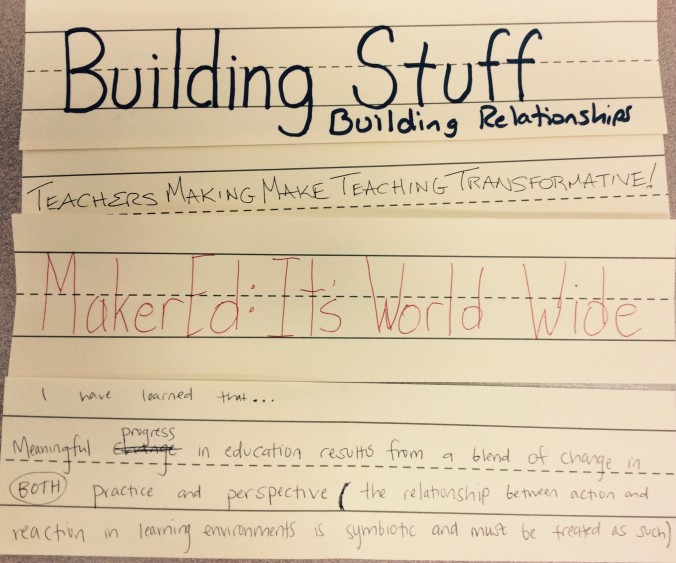
MakerEd is World Wide; Reflections from FabLearn 2015

Last weekend, Hillbrook sent a cohort to Stanford’s School of Education for the FabLearn 2015 conference. Led by professor Paulo Blikstein, this intentionally modestly sized conference seeks to bring together educational researchers and practitioners in K-12 settings to discuss making and engineering in the classroom. Ken Hay, of Hillbrook’s art department was already interested in 3D printing and attended the 2011 conference, when he recommended that I attend myself in 2012. What I saw and learned that weekend changed my teaching forever. Having designed a curriculum for 5th and 6th graders that would use design and problem solving, I felt like I was stepping out into a void. FabLearn taught me that the void was real, but that the void was occupied by good company. That is, FabLearn offered educators such as myself, a community of people asking hard questions and collecting data around the patterns we were seeing in our work.

In the fall of 2013, I applied to be on the FabLearn educator panel to share the story of my first year using maker education in my science classes. I argued in my storytelling, the need to see teachers as researchers when it came to making in school and learning in a maker space. Even if we were standing on the shoulders of giants, such as Montessori, Dewey, Froebel, Seymour Papert and Vygotsky philosophically, little was known about assessment and the documentation of learning in these new settings. Thankfully, during that same FabLearn, professor Blikstein announced the FabLearn Fellowship, an NSF funded program that would select a handful of pioneering teachers already using making in the classroom, to create an open source library of resources for other teachers, such as projects and assessment ideas. I was accepted as a fellow, and I have been learning exponentially ever since.
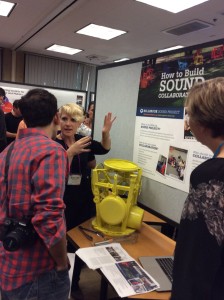
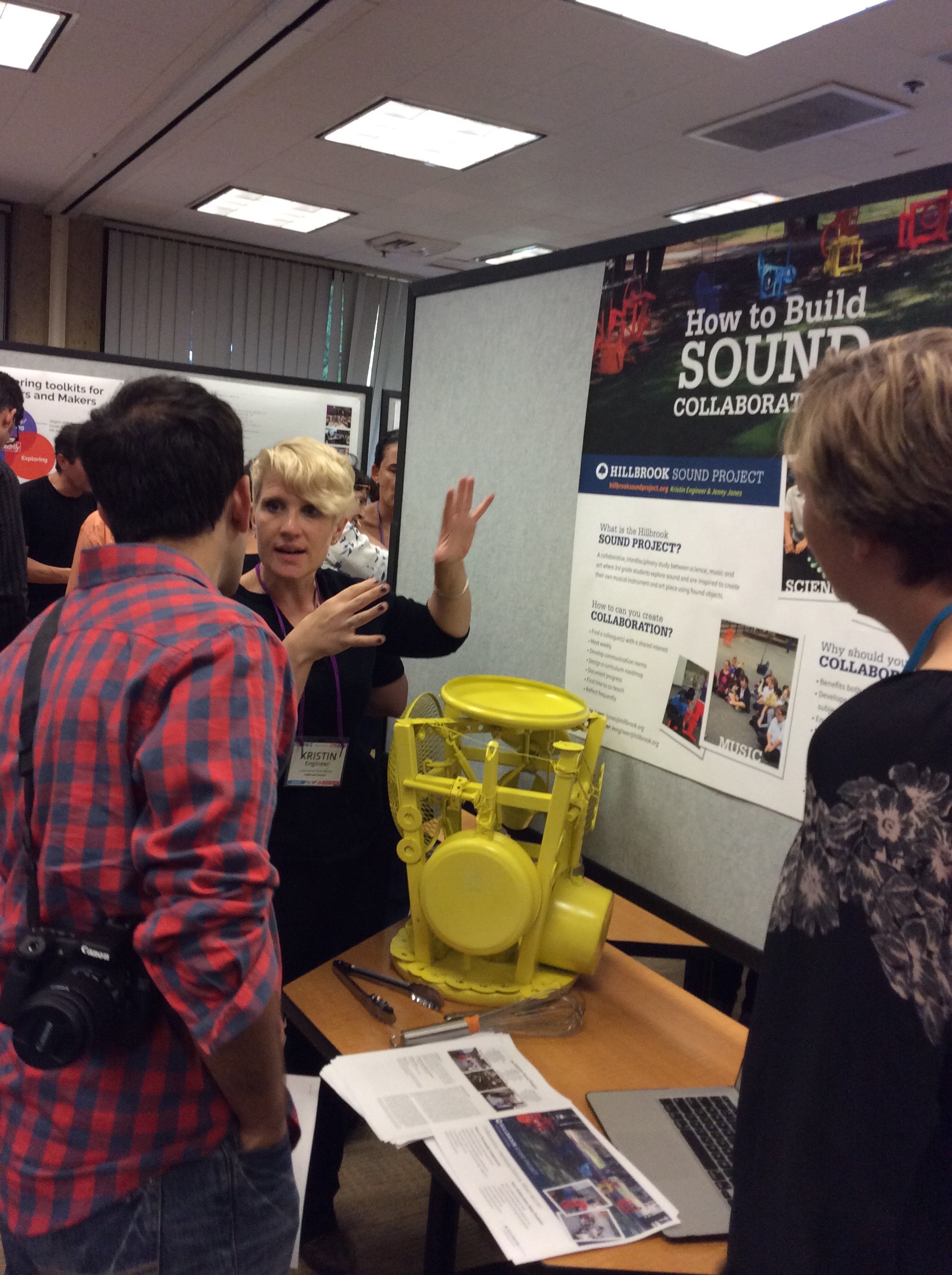
Jones and Engineer tell the story of how they collaborated to bring science, art and music to life for 3rd graders.

Jones and Engineer tell the story of how they collaborated to bring science, art and music to life for 3rd graders.

This last weekend marked the fifth year of this conference and it was particularly momentous for several reasons. First, two of our Hillbrook teachers were selected to share their maker educator story during a busy and exciting poster session. 3rd-4th grade science teacher Jenny Jones and lower school music teacher Kristen Engineer presented their poster entitled, “How to Build Sound Collaboration.” Brava to these maker educators for showing their work with literally the world. The poster session was filled with presenters and attendees who had traveled to FabLearn, from as far away as Brazil and Singapore. It was a truly global collaboration of idea sharing. 
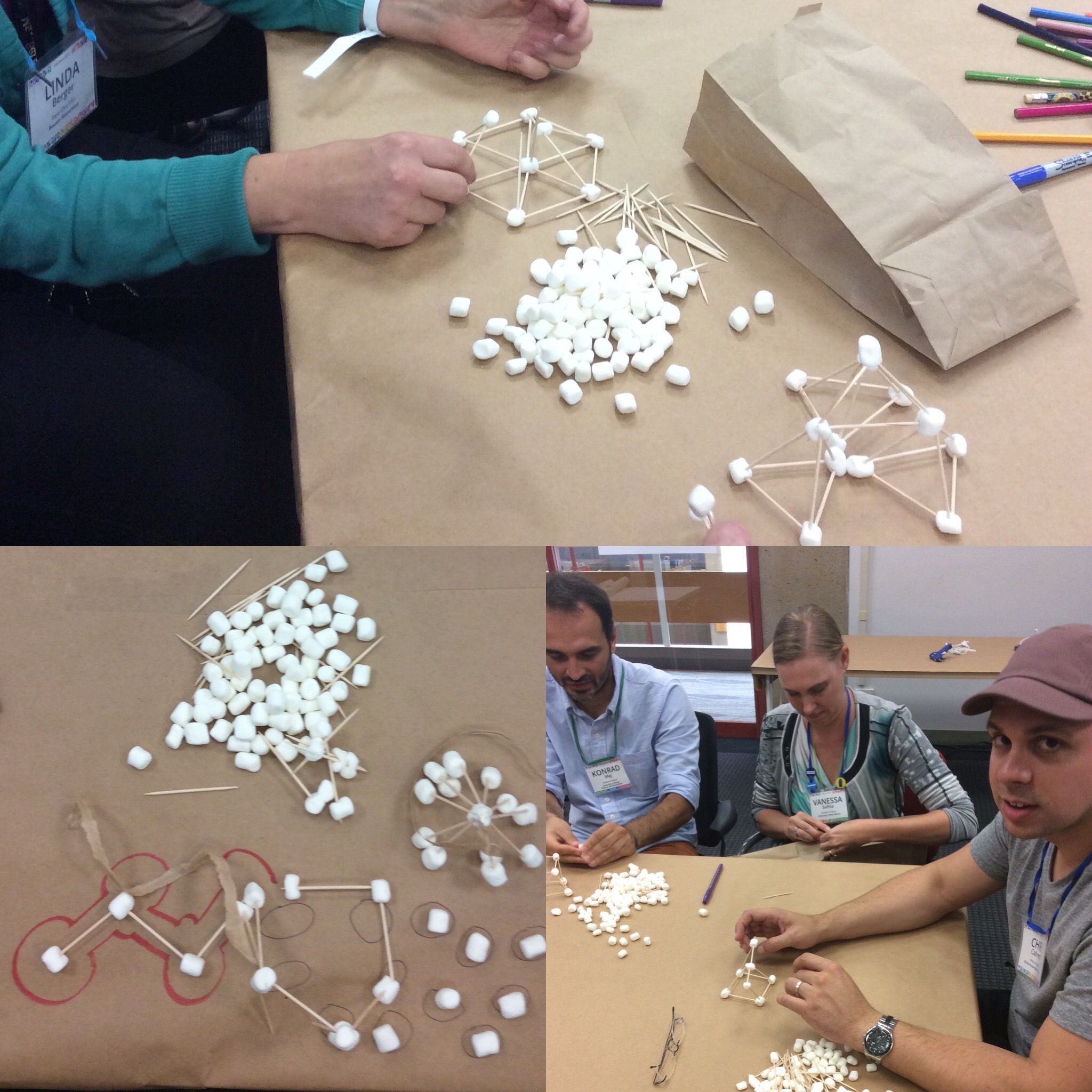
Mr. Cabrera exploring materials and math.

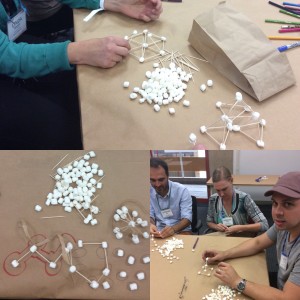
Mr. Cabrera exploring materials and math.

This event was also special because Hillbrook had several attendees at the conference supporting our team including, middle school math teacher Chris Cabrera, lower school head Colleen Schilly and middle school english teacher Rob Greco. Colleen Schilly attended the Educator Panel that I moderated on Saturday and had this takeaway to share; “The consequence of interest is MORE LEARNING. Academic test scores still currently carry a degree of importance in our culture…but interest, passion and purpose are essential. Interest yields greater attention and effort, persistence through challenge, and desire to learn more.” Ms. Schilly continues her reflection by sharing the following questions; “The panels served as a powerful reminder of the future our children are heading towards, and to provoke thought about this very crucial question: How do we provide learning experiences for children this year, next week, TOMORROW in a way that prepares them for this and what’s beyond this?”

Chris Cabrera had a transformative experience in a workshop he attended that I wanted to share as well. Cabrera states, “I was in the CNC workshop where the goal was to separate 20 people into 5 groups and have each group construct an elemental component of a 3-D printer – from scratch. ‘How Unrealistic,’ was my first thought. After 90 minutes, 20 smiling faces stood back in admiration of our creation – a fully functional 3-D printer! This is the essence of the human spirit.”

This year’s FabLearn theme was centered on Equity and Access, a topic near and dear to me,  as well as many of my colleagues, such as surprise attendee, Rob Greco. Greco had this to say about the conference; “I appreciated the efforts made by the organizers to center this year’s conference around ‘Equity and Diversity in Making.’ This focus was most visible to me in:

(1) the Foldscope workshop I attended led by Manu Prakash, whose project is about making technology — specifically microscopy— as widely accessible as possible and with an emphasis on the social aspects of learning through photographs and stories shared by diverse participants around the world. “The end result is not what matters—it’s the story that you tell.” —Manu Prakash, emphasizing that the Foldscope website is as important as the inexpensive microscope that he has designed.

(2) the “Making and Tinkering Towards Transformative Pedagogies and Learning Environments” workshop led by members of the Community Science Workshop, Discovery Cube, the Exploratorium, and Techbridge. In addition to the conversation, the journal making activity they developed and that we all participated in served as an example of a project that can bridge gender and craft/technology divides.

(3) the opportunity to meet two specific individuals of diverse backgrounds and experience who have quickly become friends. We met on Saturday afternoon during a workshop where we were made a microfluidic device together. Then we spent a good portion of the rest of the conference in conversation about topics directly related to equity and diversity in maker culture and education.”
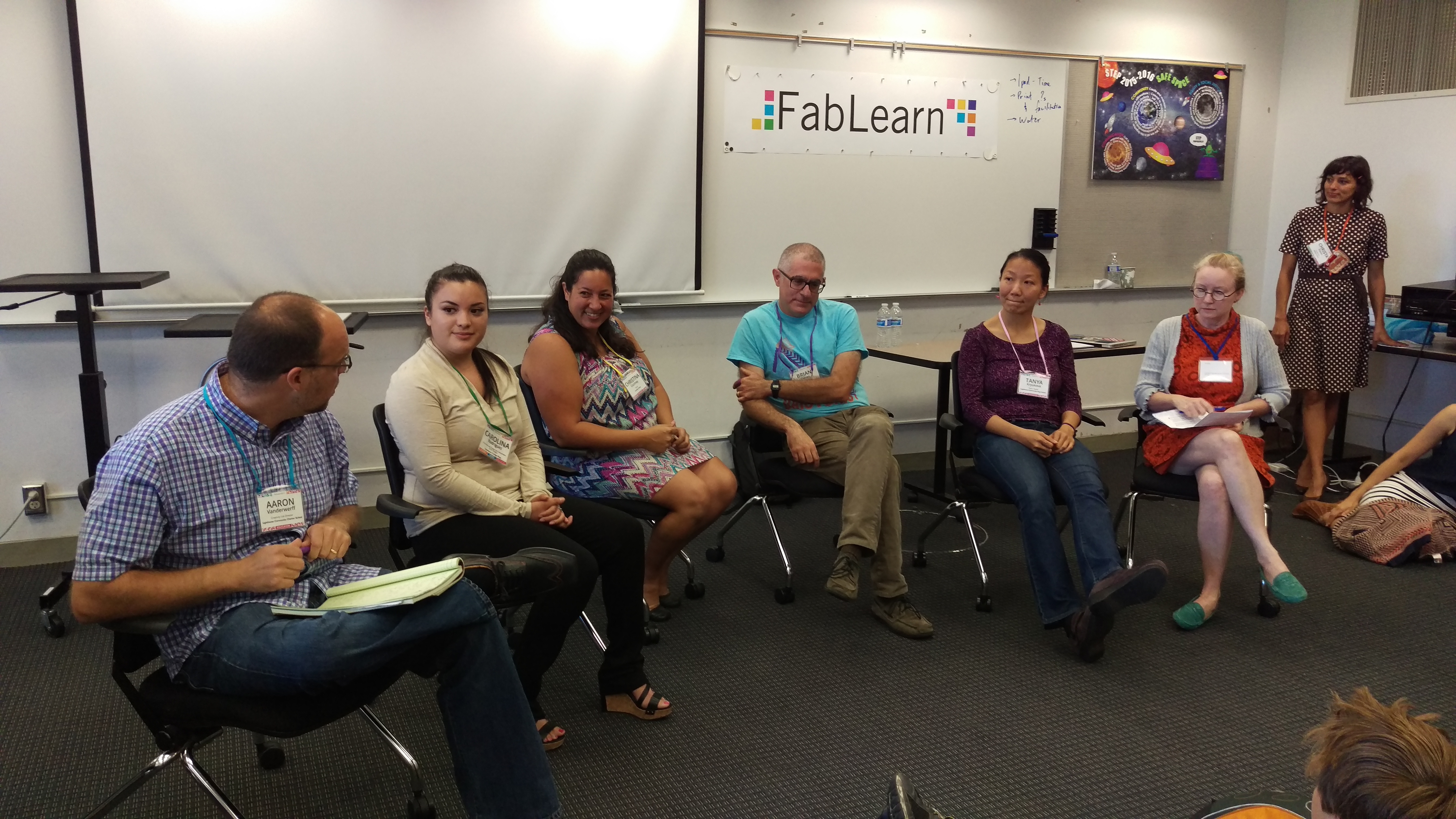
The Educator Panel on Saturday made up of public and private school teachers.

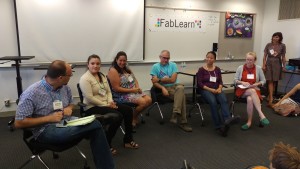
The Educator Panel on Saturday made up of public and private school teachers.

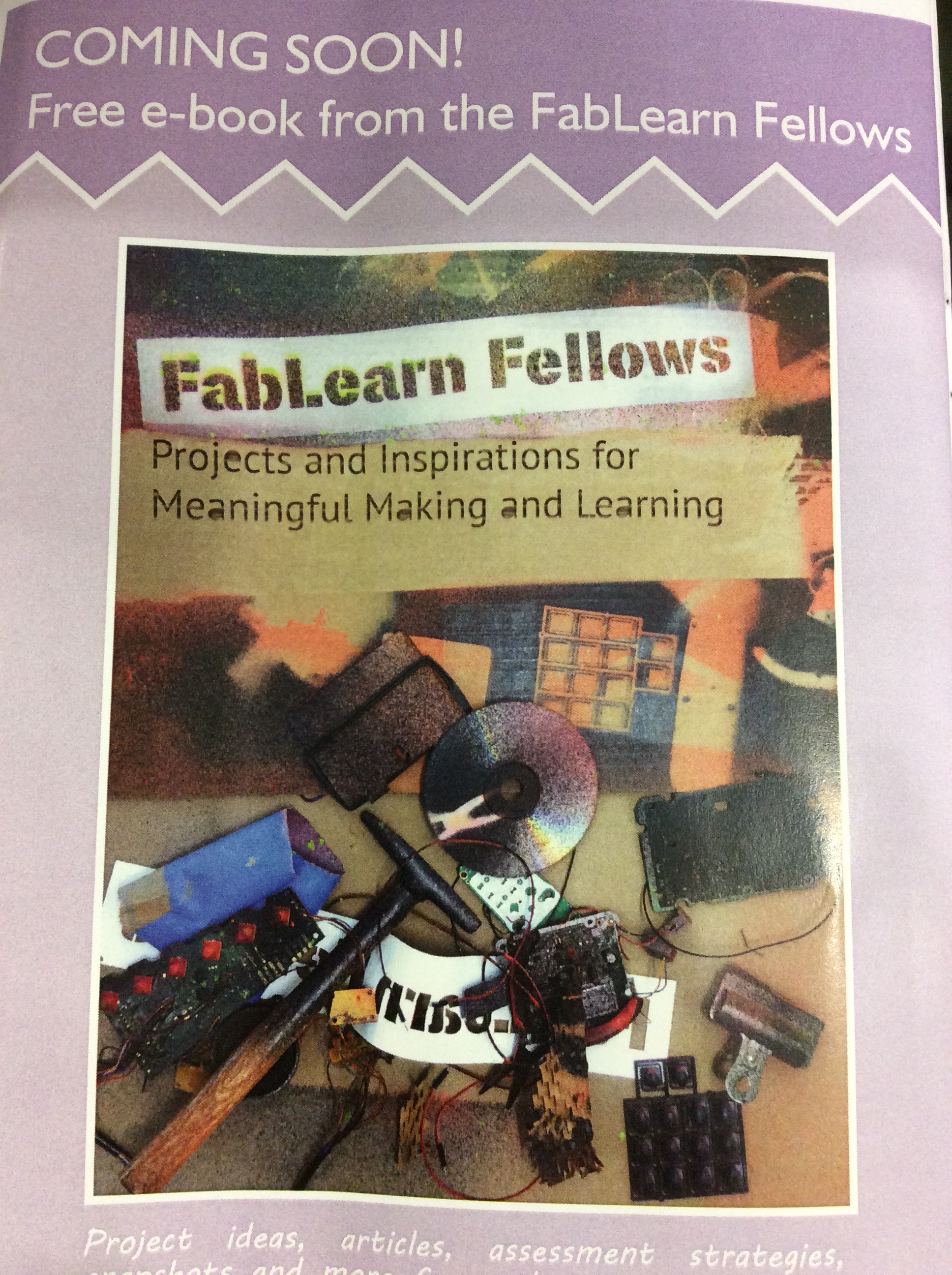
This FabLearn was also significant as a fellow, as this was my second year co-chairing the conference by selecting the papers for the educators panel, along with Aaron Vanderwerff of Lighthouse Community Charter School and Heather Pang of the Castilleja School. In this leadership role, it is always an honor to curate a panel of exceptional and creative educators willing to share best practice. As much as I love the quantitative data offered at the research panel, it is the qualitative data that practitioners share during the educators panel that truly inspires our work and leads the way. Lastly, Professor Blikstein and the Fellows announced the release our first publication, an e-book that can be downloaded for free, entitled Projects and Inspirations for Meaningful Making and Learning. Stay tuned to the FabLearn site to get your copy.
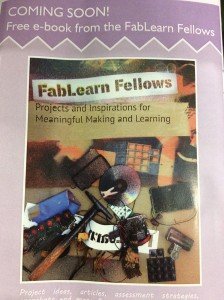
Cover Art for FabLearn Fellows e-Book.

Cover Art for FabLearn Fellows e-Book by Fellow Erin Riley
The Class of 2018 goes to Maker Faire

In fifteen days, the class of 2018 will showcase their work at Maker Faire, deemed the “greatest show and tell on Earth,” and for good reason. Showcasing work publicly is a healthy form of external reward, allowing others to learn from and get inspired by your hard work. Hillbrook will be celebrating its third year hosting a booth to showcase our student’s inventions, and year after year our students stand out for their confidence, creativity and “can-do” mindset.

Practicing problem-based-learning in the iLab for three years, I have designed and researched innovative curriculum to study the benefits of Maker Programs in a PK-8 educational setting. As part of a cohort of researchers and practitioners at Stanford to discuss best practice and relevant research in Maker Education, this collaboration has taught me, and many others looking to our program for inspiration and direction, the real value of applying the design process in education.

Using the design process to help others, as a platform to engage students in science content or acting out the steps of the scientific process, is a classically human form of learning, and it works. In a recent New York Times post, using design to solve problems was credited for getting more girls to enroll in engineering course work. The best predictor of STEM career choice is whether they self-report by the end of middle school, as seeing themselves as scientists when they “grow up” (Maltese & Tai, 2011). Students who tinker, question and invent, are more likely to develop positive identities that encourage a life-long love of science, math and the creative process.

From Hillbrook’s smallest makers in Kindergarten, to Hillbrook’s graduating class of 2015, examples of living the design process and sharing work abound, and inspire.

For instance, in Problem based Science, 5th graders spend 2/3rds of the year discovering how to apply skills and content towards the creation of a complex artifact that fills a need on campus. With the help of 10 Hillbrook faculty and staff members, volunteers Lucas Wilson (mechanical engineer), and Chris McKenzie (parent to Madelynne ‘18), along with the promise of sharing work at this year’s Maker Faire, the class of 2018 has been deeply immersed in the design process.

Taking time for the design process encourages academic risk taking and collaboration. Deep projects also support literacy in science, math, research and writing. Mathematical literacy is applied when calculating ratios, geometric dimensions and scale. Students practice self-directed literacy and executive functioning when crafting a professional email to their adult collaborator asking to schedule a time to test their design. Knowing when your design is ready for testing and feedback without the teacher telling you…that is living the design process! Questioned how a trebuchet was filling a need, 5th grader Eli and his team spent hours crafting a persuasive essay in defense of the medieval weapon of siege. ”Knowledge of how to use a dangerous tool makes it less dangerous. If you know how to use something correctly, there is less room for error. The trebuchet will teach people to be more careful,” argues Eli, unaware of how cool technologies and learning about ballistics can support social emotional learning in boys. Understanding your ideas well enough to “sell” them to others? That is living the design process.

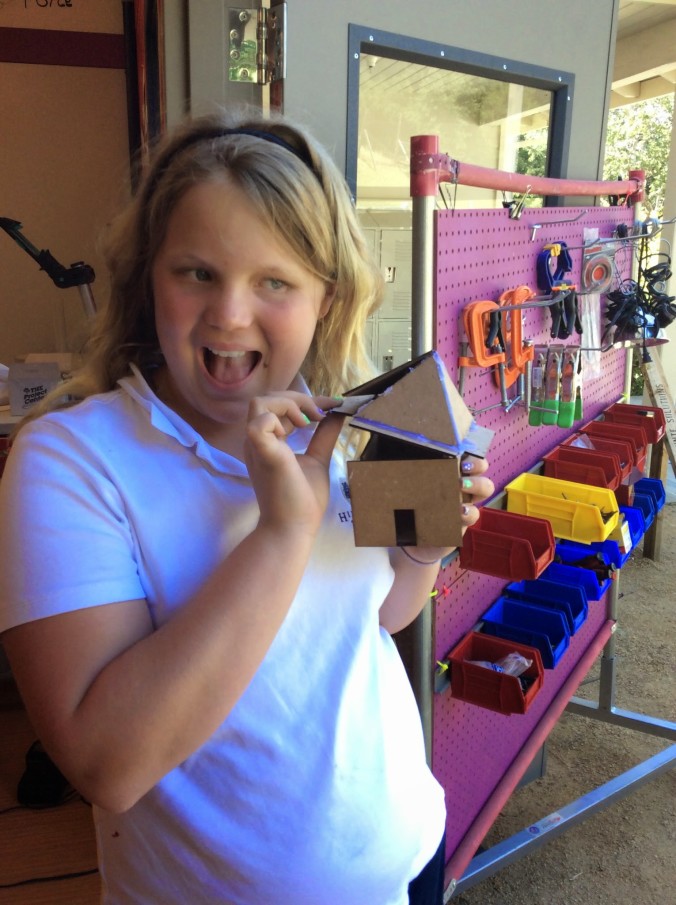
Members of the class of 2015 have also lived the design process. From an idea first formed in 2013, to seeing boxes of “10 Penny Nails” resting against an asymmetrical roofline, the building of the Hillbrook History House has been a year-long showcase of work in the heart of our campus.

Perhaps the greatest lesson that I have learned from Maker Education is that hands on learning, and real problem solving can bring out the creative genius in students. It has been especially successful for students with learning differences, such as 5th grader Morgan, who began the year with some trepidation having been diagnosed with dyslexia. Free of the pressures of dysgraphia or spelling, she used learner friendly technologies (such as Explain Everything and iMovie) to tell her learning story, and what a story it has been. In short order, Morgan learned to 3-D print, laser cut, make scale models, code in Scratch, design interaction devices for video games that teach math to younger students, and designed a board game that promotes creativity and teamwork. Solving problems in your community, working at your full potential, and making something that works…that is living the design process.

Once making the shift to a learning facilitator, I was able to expand my own understanding of how students learn and share that knowledge globally via webinars, local Maker Educator meetups, conferences and of course digital professional learning networks, such as Twitter. A story I proudly shared at this year’s CAIS regional conference came from earlier this year. A projector was broken and I was about to email for tech-help, my advisee Raya reminded me to practice a “maker mindset” when she exclaimed, “Ms. Flores, this is the ilab; we have tools. We can fix it!” and then she proceeded to do so. Access to real tools, knowing when to apply them spontaneously…that is living the design process.

Maker Education reminds us that real work takes time and trust in learners. Trust is formed when you keep an optimistic view of children, their desire to do good, and their ability to self-direct when engaged by relevant content. If you’re interested in seeing how making fosters a sense of agency, that can lead to making the world a better place, please come to Maker Faire, May 16th and 17th, and hear it from our inventors first hand.
Images of Spring Hard Problem Class of 2018

Works Cited

  1. Maltese, Adam V., and Robert H. Tai. “Pipeline Persistence: Examining the Association of Educational Experiences with Earned Degrees in STEM among U.S. Students.” Science Education 95.5 (2011): 877-907.

Learning by Making: What is Constructionism?

In this one hour webinar, Hillbrook iLab coordinator joins a panel of researchers and practitioners to discuss how to apply constructivist learning through problem based science and making. What we have learned in 3 years.

Older posts