Connecting Reggio Emilia to Making in the Classroom
During the February break, Hillbrook sent a team of four teachers to a one day workshop called Invent to Learn with a focus on Reggio Emilia practices and ‘making in the classroom’. Part of our day was spent networking with teachers from all over the country, while examining the latest technologies for constructivist learning in the classroom. In a nutshell, constructivist learning theory supports the rise in the more popularly termed “making” in the classroom. Making is considered to be any activity that allows kids to use digital, as well as analog technologies to construct knowledge. Often this occurs through the literal construction of an artifact, demonstrating understanding of how things are made and work, or a process of knowing termed “parts, purpose and complexities” by Harvard’s Agency by Design, a research project looking at constructivist learning and making in the classroom.
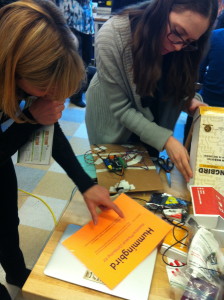
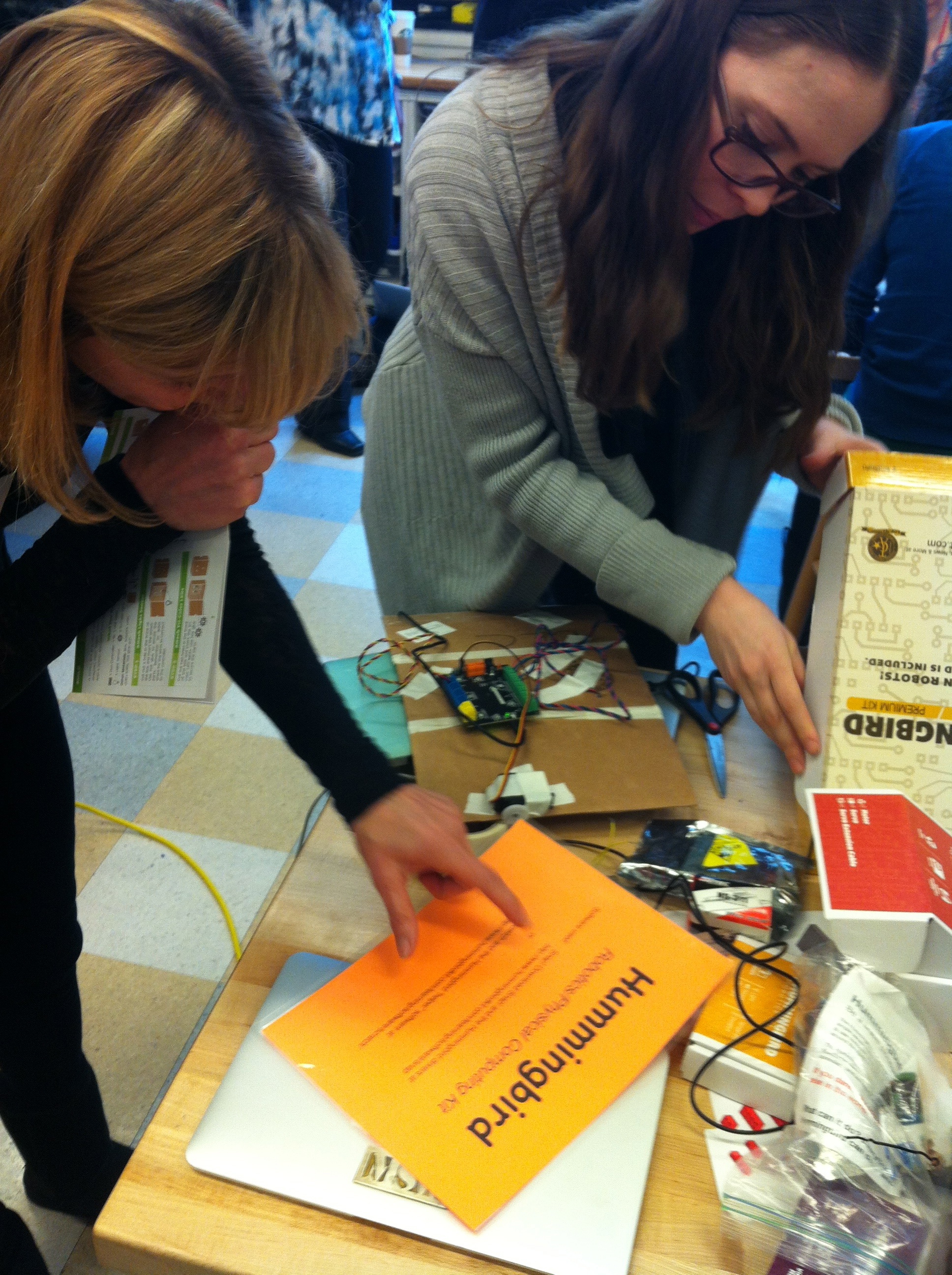
First grade teacher Laura Nielsen works with Hummingbird, an interface for physical programming, one of the many great tools participants at the Invent to Learn workshop were exposed to.
Hillbrook school has been leading the charge in making in the classroom for as long as we have existed as a school, stemming from the first wood workers and financial planners, who built the village of friendly relations to today’s rich array of making in several spaces that explore the fine arts, music, ceramic, wood, textiles and electronics. Hillbrook is not alone in this charge, in the last 10 years making in schools has seen a dramatic resurgence, and maker spaces are popping up in schools exponentially all over the world in response. Research stemming from Harvard’s Agency by Design Project, Stanford’s Transformative Learning Technologies Lab (TLTL) and FabLearn Fellowship and the non-profit Maker Education Initiative support the growing claim that making in the classroom is one of the most child appropriate, rigorous and authentic manners in which academic content can be delivered and assessed. More support for making in the classroom comes from deep ties to historically respected educational philosophies that emerged as a response to industrialized education at the turn of the last century, including work from the Netherlands and Italy, thus the tie between making and Reggio Emilia.
Reggio Emilia is a town in Italy that is renowned for a movement in education that focuses on the learner with unfailing respect for the child’s personal educational journey. Given this, the second part of the workshop was a trip to a traveling exhibit called the Wonders of Learning, a look at the Reggio Emilia philosophy in education. Colleague and student of early childhood education Jamie Bartels describes his visit to the exhibit as follows: “The Reggio Emilia ‘Wonder of Learning’ traveling exhibition does not have a guide; it invites the visitor to explore, observe and listen, ‘aesthetic antennae vibrating,’ as he or she attempts to peer perspicaciously past the walls and atelier into the imagined classroom practices that make the early education methodology of the Reggio Emilia schools so widely popular.” Here is a quick synopsis on Reggio Emilia from the Wonders of Learning site:
“The Reggio Emilia approach, while having its own history and character, has been deeply informed by the thinking of theorists such as John Dewey, Jean Piaget, Lev Vygotsky, David Hawkins, Jerome Bruner and Howard Gardner. It is grounded in the image of the child as having extraordinary potential for learning and change, and in the school as a site of interactions and relationships where each individual is respected and valued as part of a community. Ideas are shared between children and teachers and explored through the many languages of learning. Children are part of the organization of the daily life of the classroom where the curriculum emerges from the children’s investigations and is co-constructed together with teachers and parents. All three are protagonists in the learning process.” – Wonder of Learning Exhibit
As a school, Hillbrook has been highly influenced by several key concepts from Reggio Emilia. The first of which is how we have come to view learning spaces as the 3rd teacher (the first being a pedagogista and the second an atelierista, to be discussed shortly). Environment as the 3rd teacher is a concept first explored at Hillbrook through our 2012 iLab study. We now understand that environment has an influence on what questions students ask, how they approach learning, as well as factors of productivity and well-being.
The second key concept we explore and value at Hillbrook is redefining the role of teacher in the classroom. No longer the sage on the stage who lectures at children, Hillbrook teachers model a more progressive, as well as differentiated approach to learning in the classroom. In Reggio there is a term called the 100 languages of children, an homage to Howard Gardner’s Multiple Intelligence Theory. Knowing that rote memorization or test taking are not the only, nor the richest way to measure or demonstrate learning, we can respect students for their unique questions, passions and talents. This falls in line with the Reggio structure of having the pedagogista and the atelierista, to help support a more learner-centered approach to education.
A third concept that we are exploring at Hillbrook, involves student choice, not only in their work spaces but choice about their curriculum. Exploring ways in which teacher and students negotiate what they learn and how they are assessed is an ongoing goal that teaches children autonomy, agency and positive identity formation. In Reggio Emilia as well, learning is an artful dance between the learner and the environment, which includes the people in that environment (such as the pedagogista, the atelierista, the family or the community at large). The pedagogista can be thought of as a person who knows about learning and the brain, age appropriate content to expose children to, effective ways to document learning and how to make meaningful connections with parents and the community at wide. The Atelierista is often an artist, or expert in material science, who manages an atelier (learning space for discovery of natural materials or concepts in nature, such as light or sound). The essence of the atelierista is to honor the imagination and natural desire to discover in childhood by curating a learning space that inspires questions and learning in an organic, child-centered fashion. The best example of this model is happening now in the Hillbrook maker spaces, where we have an experienced educator and or experienced maker in residence.
Further Discoveries while in NYC
Collections and Categories
While in NYC we visited a few institutions for inspiration, The Hewitt Cooper Design Museum, The Metropolitan Museum of Art, MomaMath the Museum of Mathematics, The Brooklyn Museum and Brooklyn Public Library.
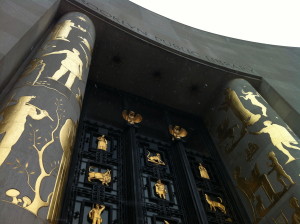
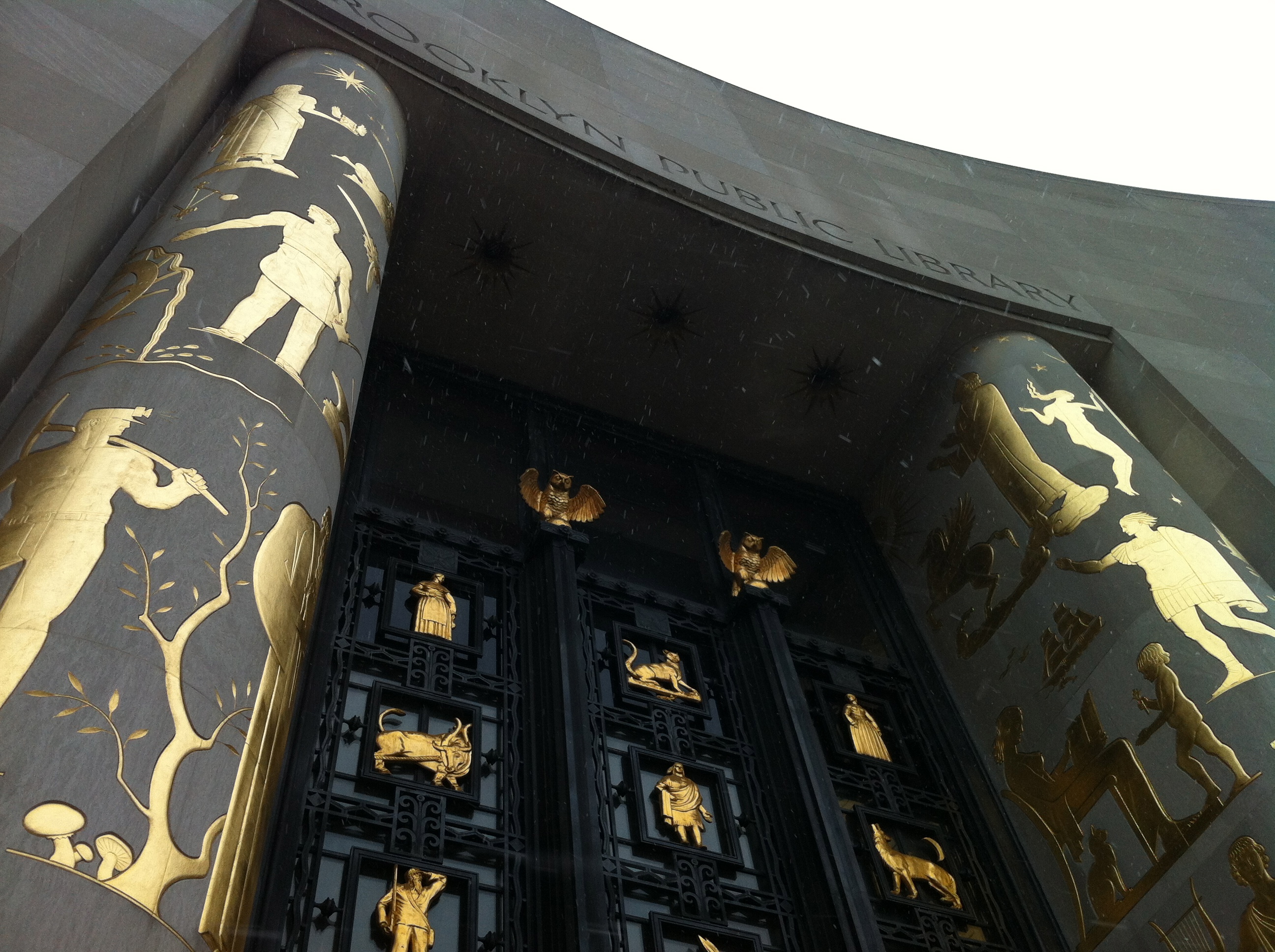
Brooklyn Library
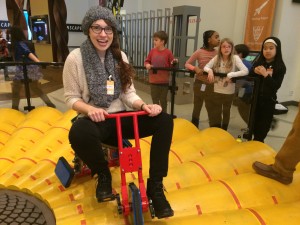
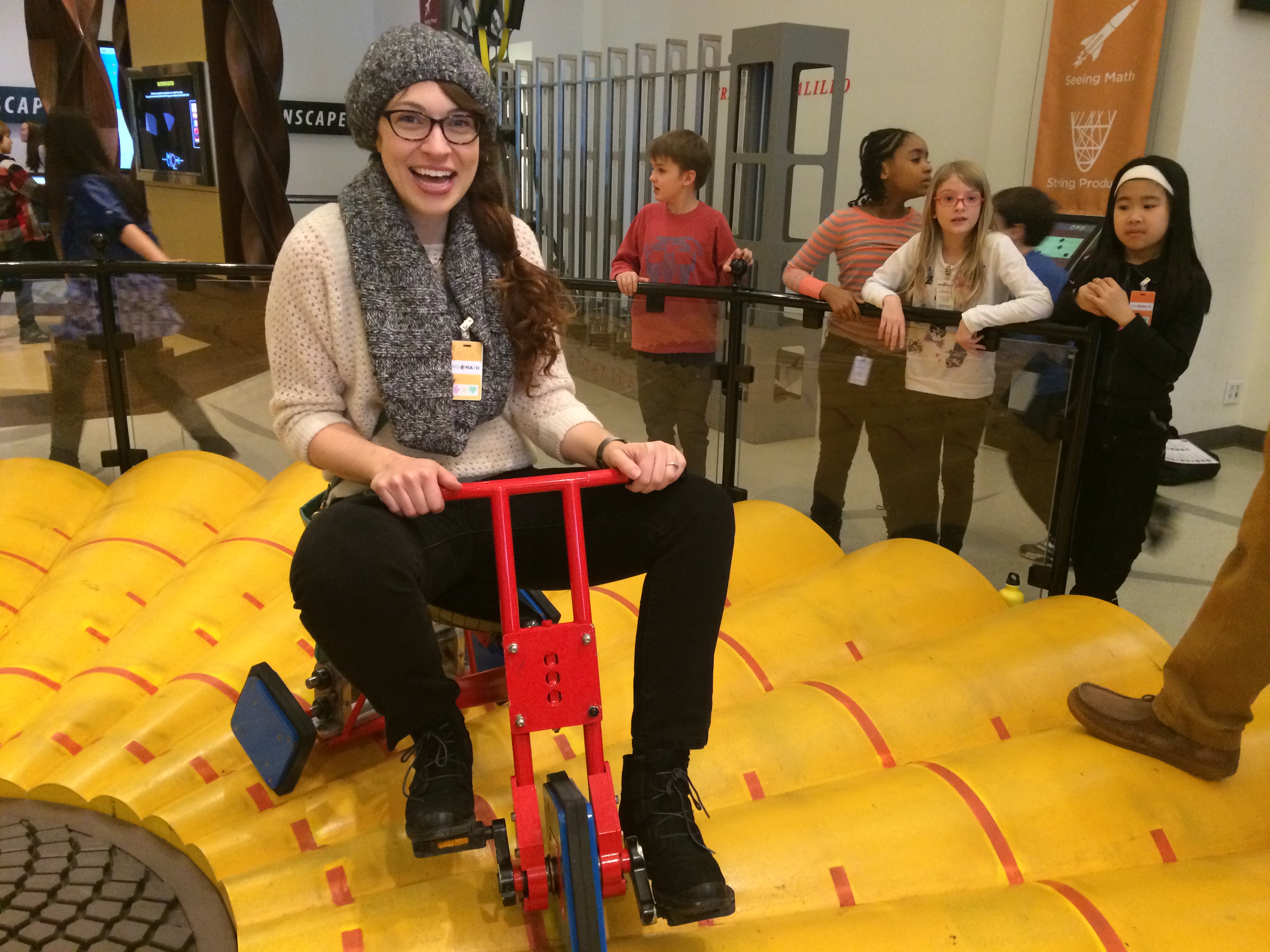
Ms. Megan Collins, Kindergarten Teacher keeps the younger attendees at MoMath waiting their turn on this geometrically informed race track
Taking time to visit places that focus on collection and categories tied in well with the theme of Reggio Emilia, as another key concept in Reggio is to have children work on projects long enough that the product is timeless and worth keeping around, such as the treasures we see at libraries and museums. Moreover, if you are a resident of NYC, these spaces become your classroom as well.
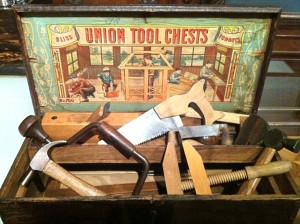
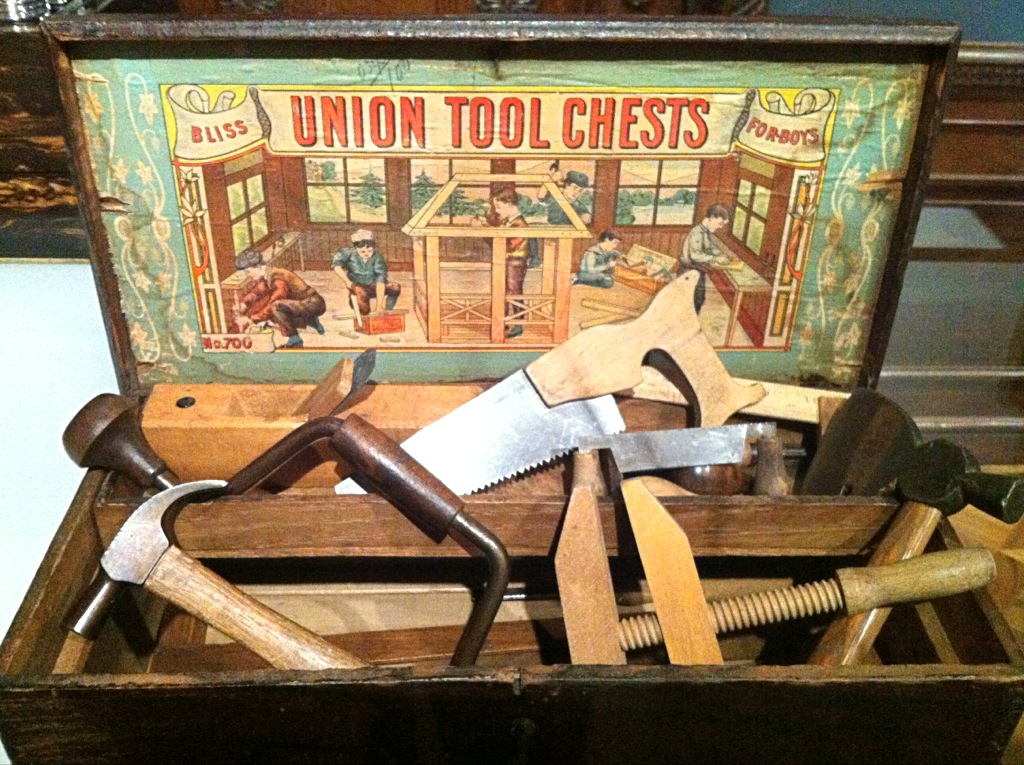
Child’s tool box on display at the Hewitt Cooper Smithsonian Museum of Design, from the Tools exhibit, a history of technology for making and discovering, note that nothing is made of plastic.
Art + Science = Design
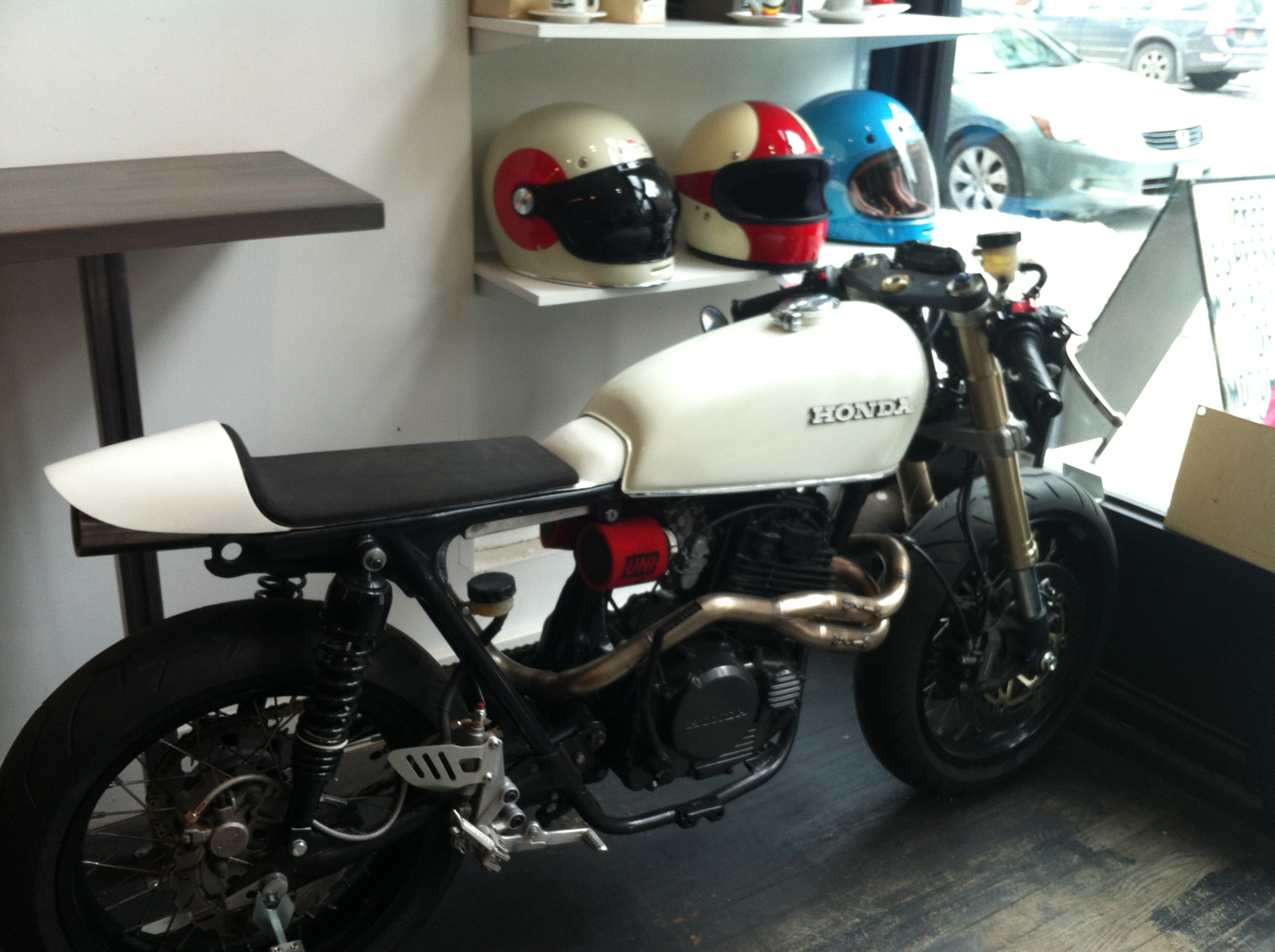
Further inspiration came from just observing street art and the booming entrepreneurial efforts in revitalized NYC neighborhoods. A growing interest in building strong STEM programs in schools has programs turning to the arts to inform and foster the creativity that is an essential part of doing science and engineering. This movement can be seen in the music and science project in 3rd grade at Hillbrook, as well as a growing DIY generation of motorcycle enthusiasts building and fixing vintage bikes for showing off in cafe’s in Brooklyn (see photo).

Restored vintage Honda motorcycle parked in a cafe in Brooklyn.
The maker movement has always been strong in the design arts and architecture, now it is seeing a resurgence in mechanical/electrical engineering, food science, and physical programming. After all, what is Design, other than the polyandrous marriage of material science, scientific testing and aesthetics.
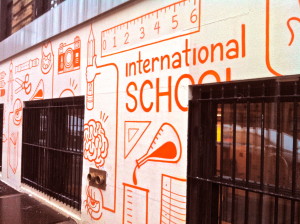
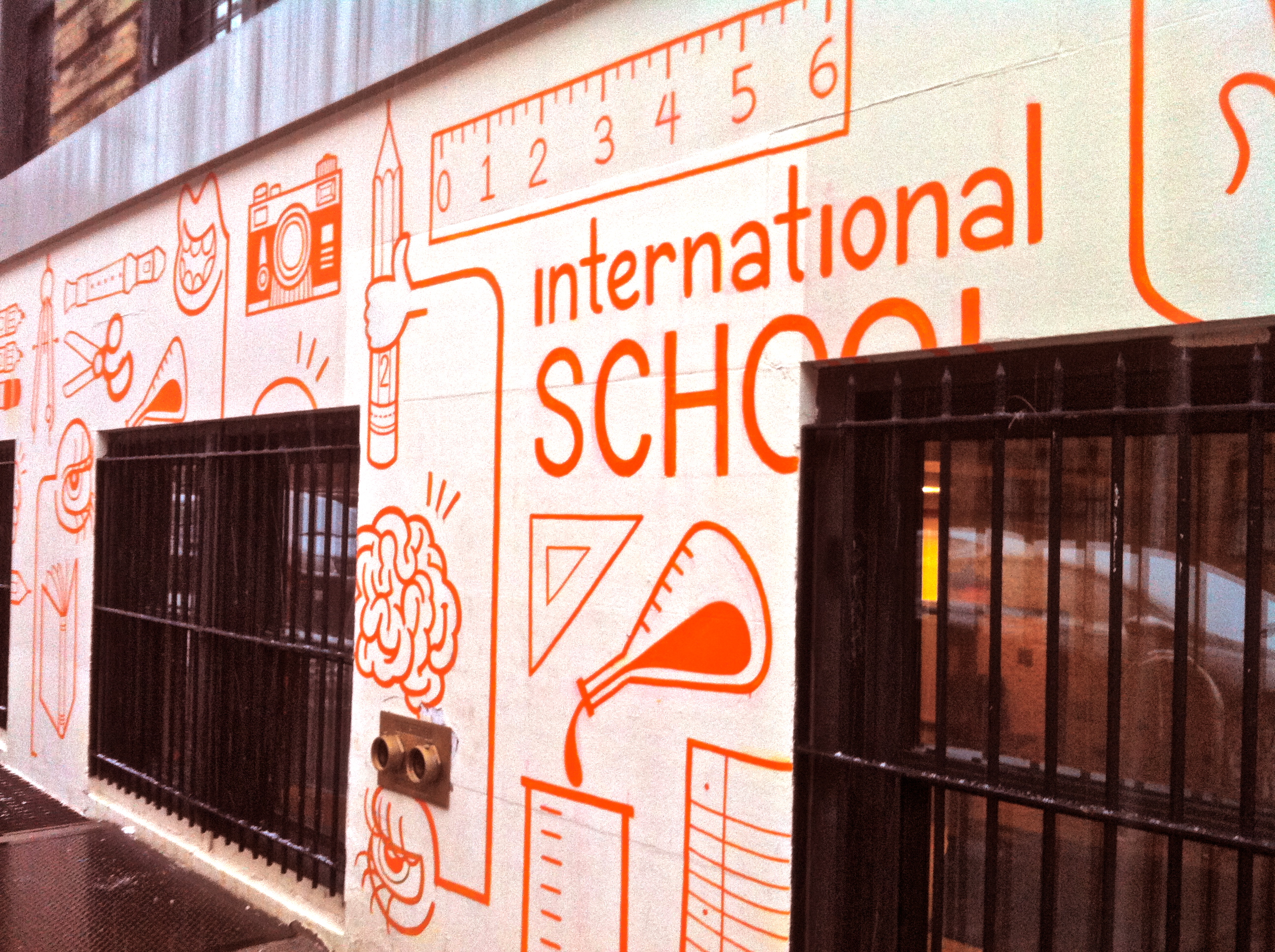
Pop art marks the entrance to this school in NYC. Simple graphics explain what goes on inside and makes the school seem like a fun place to be.
Sustainability and STEAM
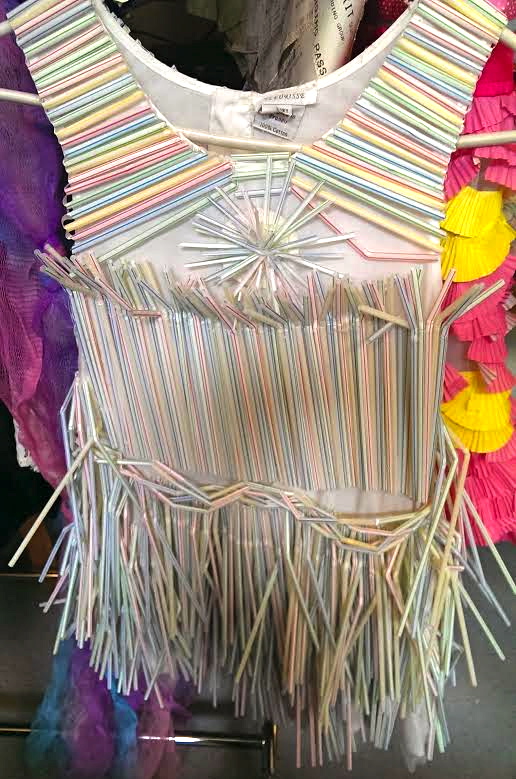
While in NYC, we also visited schools with the intention of collaborating on ideas around learning spaces and curriculum. These schools included the Calhoun School, a K-12 independent school known for progressive approaches to learning spaces and a strong sustainability and roof garden program, as well as Marymount, an all girls 6-12 school with a maker space and data visualization lab. At Marymount we saw a clothing rack of designer dresses, all made from you got it, garbage. Stunningly beautiful and well constructed, this example of up-cycling, art and science was a highlight of our visit.
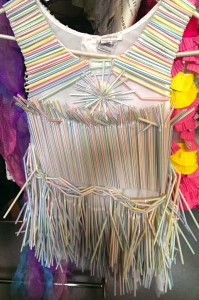
Dress made from straws as part of a fashion week lesson for upper school girls at the Marymount School in Manhattan.
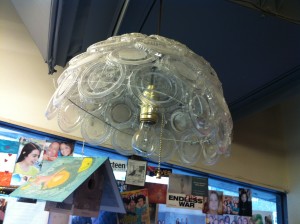
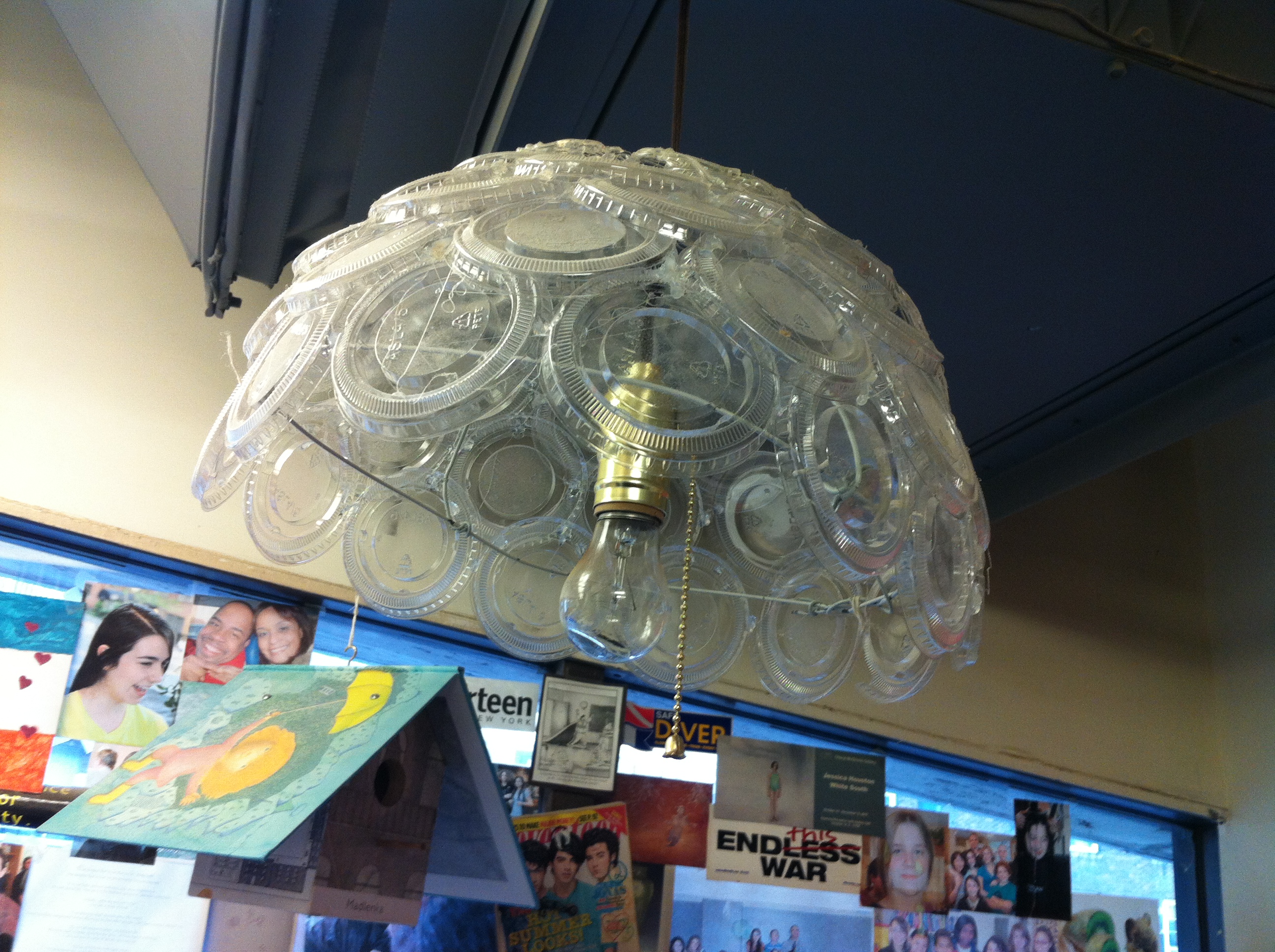
Lamp made from take out lids as part of Calhoun’s sustainable art and science program. This project was called Dumpster Dive Design.
All in all, this trip was as a journey of discovery, the path of which arched nicely home to Hillbrook as affirmation of what we stand for as a school. Energized, inspired and grateful for the California sunshine, we all feel more connected to global, like-minded learning communities our students now have access to.

Recent Comments