The Awesome World of Making @ Hillbrook

Stories of Making and Constructionist Learning

Category: MiniMakers (JK-4th)

See how making plays a part of our culture of curiosity, kindness, and play at the Hillbrook school. “Meet the Mini-Makers” tells the story of how our youngest students express their need to develop their sense of competence and creative confidence through kinesthetic learning modalities. The goal of making in lower school encompasses the following;

1) To make things we love

2) To expose learners to Materials, Tools and Patterns; to foster a maker mindset of curiosity about what things are made of and why, which encourages the super powers of observation through pattern making and finding, and create agency to effect change in the world through making and problem solving.

Building a Foundation for Making + Design @ Hillbrook

One aspect of Hillbrook that has not changed much in the last 80 years is the school’s dedication to the Arts and Crafts. This dedication is seen in the amount of time students are given in their schedule to make and create, and in the amount of spaces we dedicate to creativity on campus. Beginning in Junior Kindergarten,  every Hillbrook student spends several hours a week in the school’s makerspaces for wood, music, ceramic and the fine arts. Signature projects in each grade introduce students to the skills and mindsets of real artists, such as measurement, composition and material science.
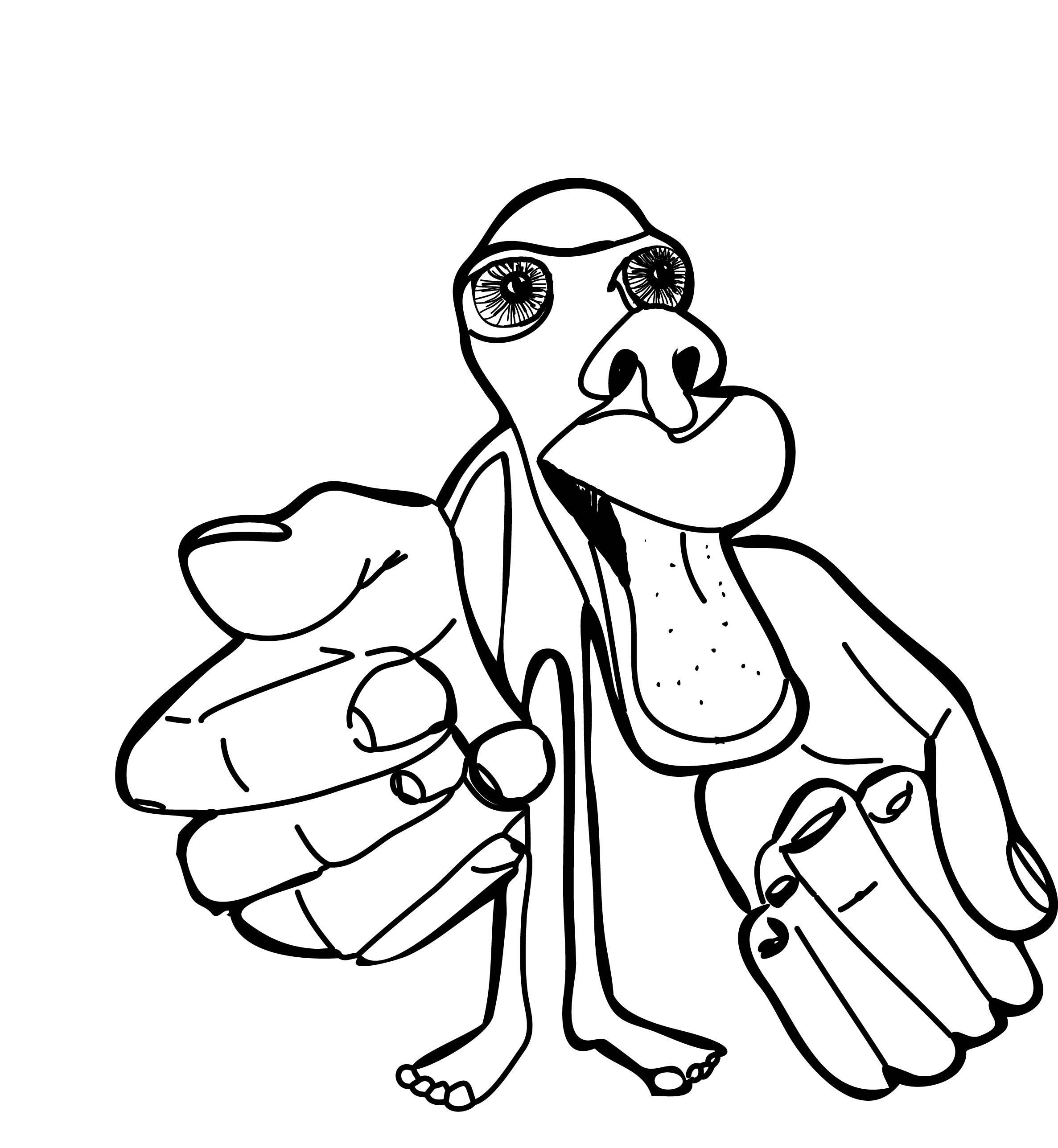
The Somatosensory Hermunculus Map, showing the relative dedication to the senses in the brain.

The Somatosensory Hermunculus Map, showing the relative dedication to the senses in the brain.

Having students create art that invites questions creates a natural bridge to science/math/humanities that resides in the emotional selves of our students. Making art is a form of constructionism that communicates concepts and ideas while allowing students to use their heads, hands and hearts in novel and inspiring ways.

The construction of art, whether on paper or in 3-dimensional space acts as a valuable form of assessing student understanding,  it makes thinking visible (Ritchhart, Church and Morrison, 2011). Making is also really good for brain development at all ages . Exposure to the Arts early gives Hillbrook students more skills and tools with which to flourish in middle school. Studies on the effects of students constructing and making have shown that when students construct their own physical models, they gain access to content via multimodal (visual, kinesthetic, auditory, written) representations of that content (Jackson, et. al. 2008, Dukerich, 2015). In the book, The Hand by neurologist Frank Wilson at the University of California School of Medicine, San Francisco, Wilson builds an argument for why hands-on learning is so important to thinking, and understanding by referencing the somatosensory homunculus map. Models which engage the visual, auditory and tactile parts of students, therefore are more effective in aiding mathematical, scientific or artistic literacy.
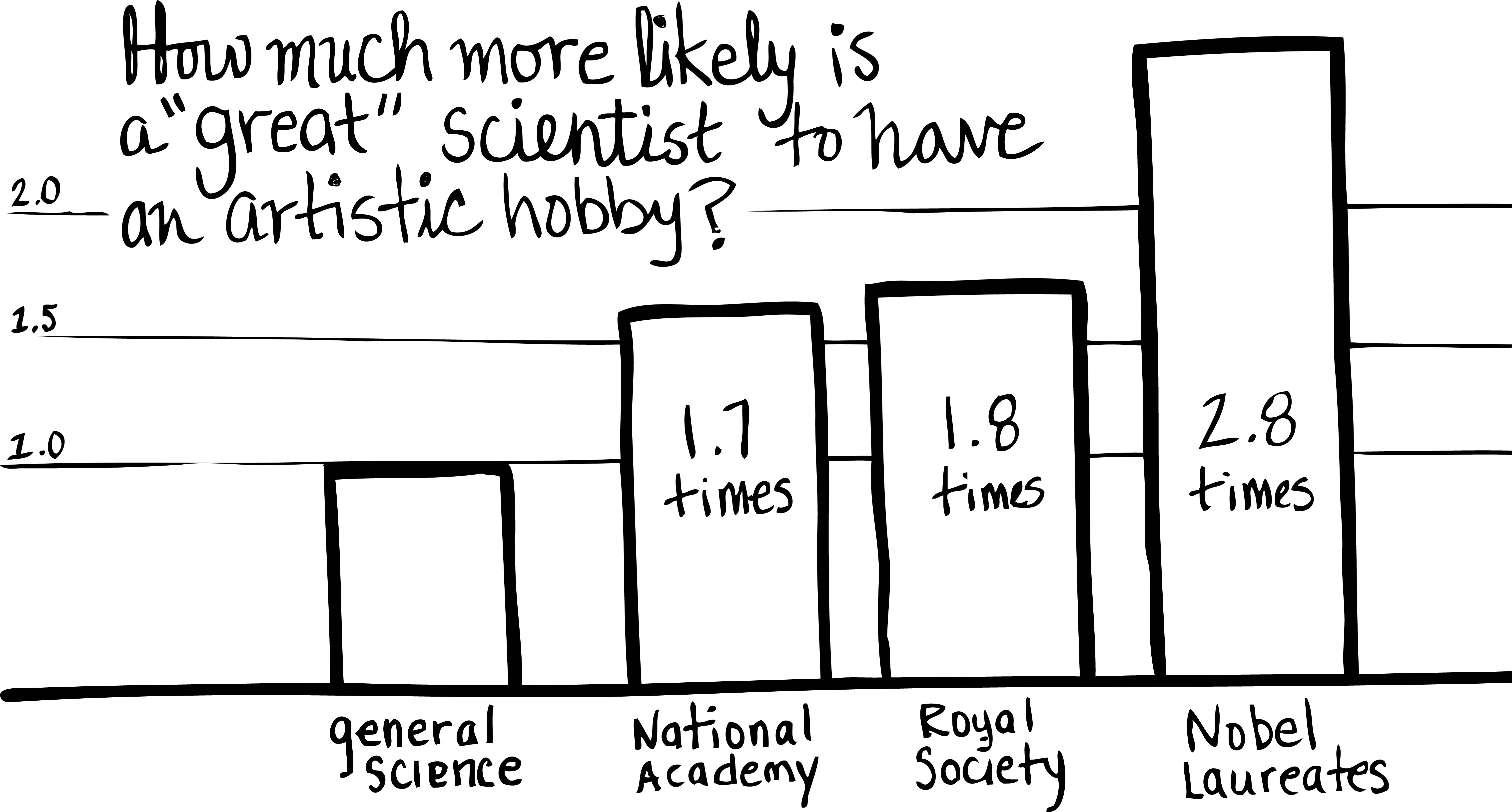
Data Table of Great Scientists with an artistic hobby, data from (Root-Berstein et al., 2008)

Data Table of Great Scientists with an artistic hobby, data from (Root-Berstein et al., 2008)

Ada Lovelace (1815-1852), daughter of the controversial poet Lord Byron and the first computer programmer, coined the term “poetical science” to describe the fruitful merger of science, mathematics and the human inclination towards beauty, also known as art. Today we use the acronym STEAM to describe the addition of art to the Science, Technology, Engineering, and Math fields, but we have far to go before we realize Ada’s vision of seeing art as having an essential role in doing great science. Even with today’s movements to teach STEM as STEAM, the image of the artist and the scientist are mostly polarized in mainstream culture. Nevertheless, the two perspectives and practices of art and science have lived comfortably side by side throughout most of history, each informing the other symbiotically. Some have even pointed out that the greatest minds of science and those seen as successful in life in general have been polymaths, with passions and hobbies in the Arts outside of their creative genius in math, science or technology (Milgram et.al., 1997, Root-Bernstein, et.al. 2008).
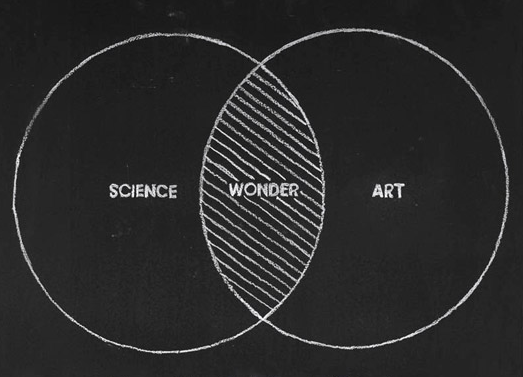
Screen-shot-2010-11-22-at-7.57.41-PMAt Hillbrook, the emphasis on the Arts in lower school builds an important foundation for middle school students as they are able to apply the skills and tools they learn to their academic subjects and beyond. Confidence using tools, materials and ones own creativity are super powers that all Hillbrook students are fortunate enough to be asked to share and celebrate on a daily basis. 


IMG_3299

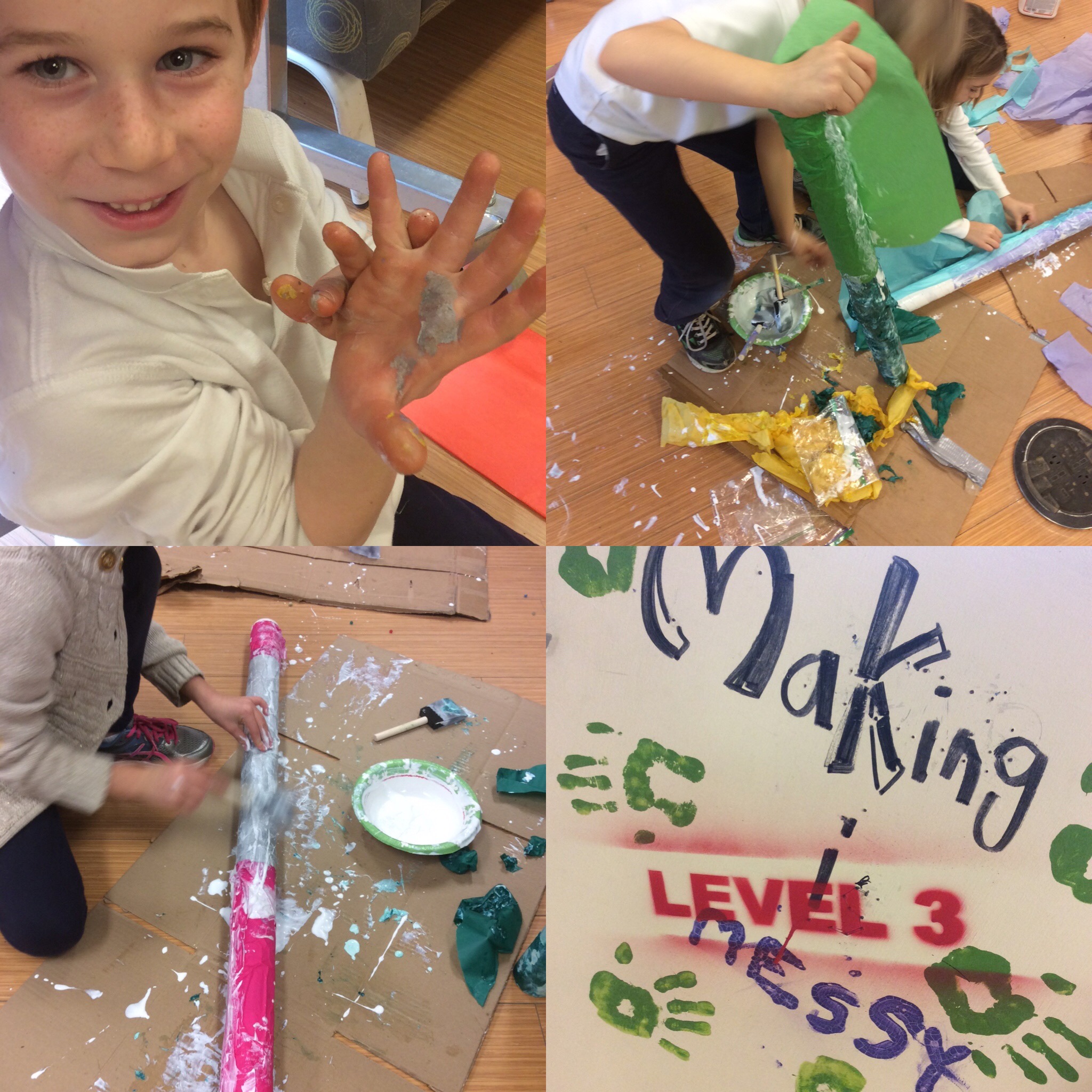
1st graders make musical instruments in the iLab, where messes are part of work.
IMG_3019

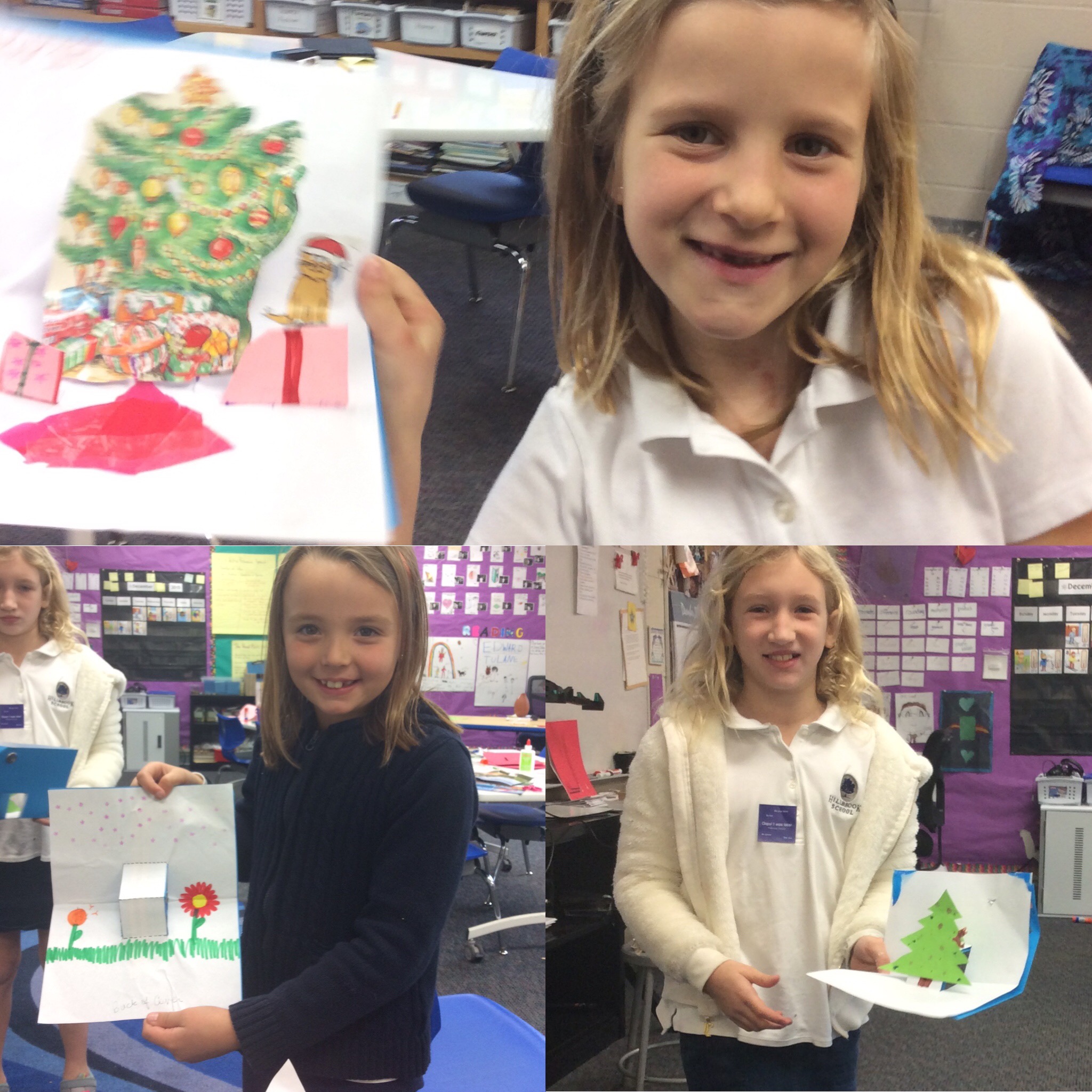
During our hour of code, some students opted to work with paper, copper tape, glue, pens and LEDs to create light-up holiday creations.
IMG_3583

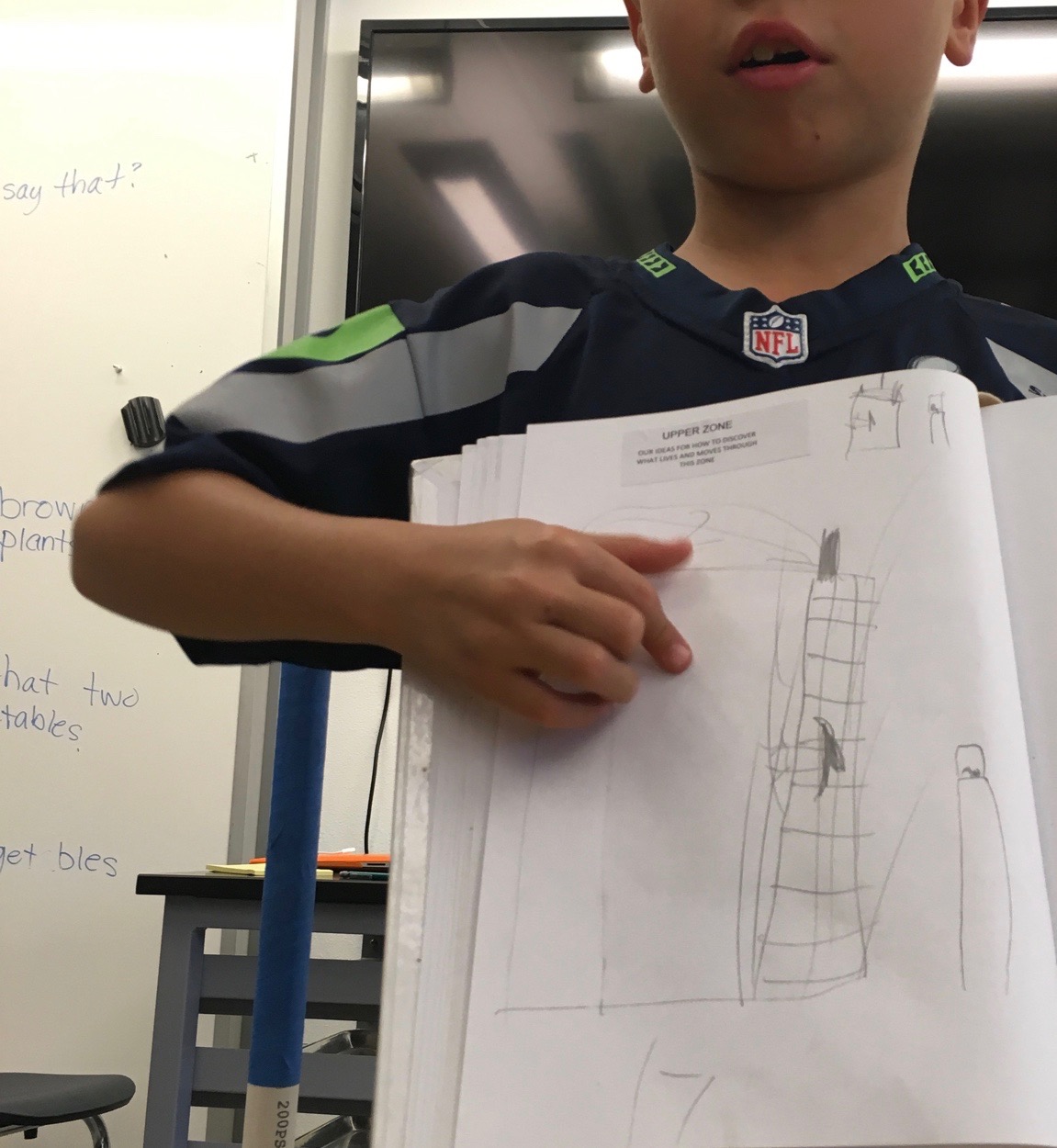
Basic drawing skills come in handy in every class. Here a science student uses drawing to model his understanding of the layers of the biosphere on Hillbrook’s campus.
IMG_3320

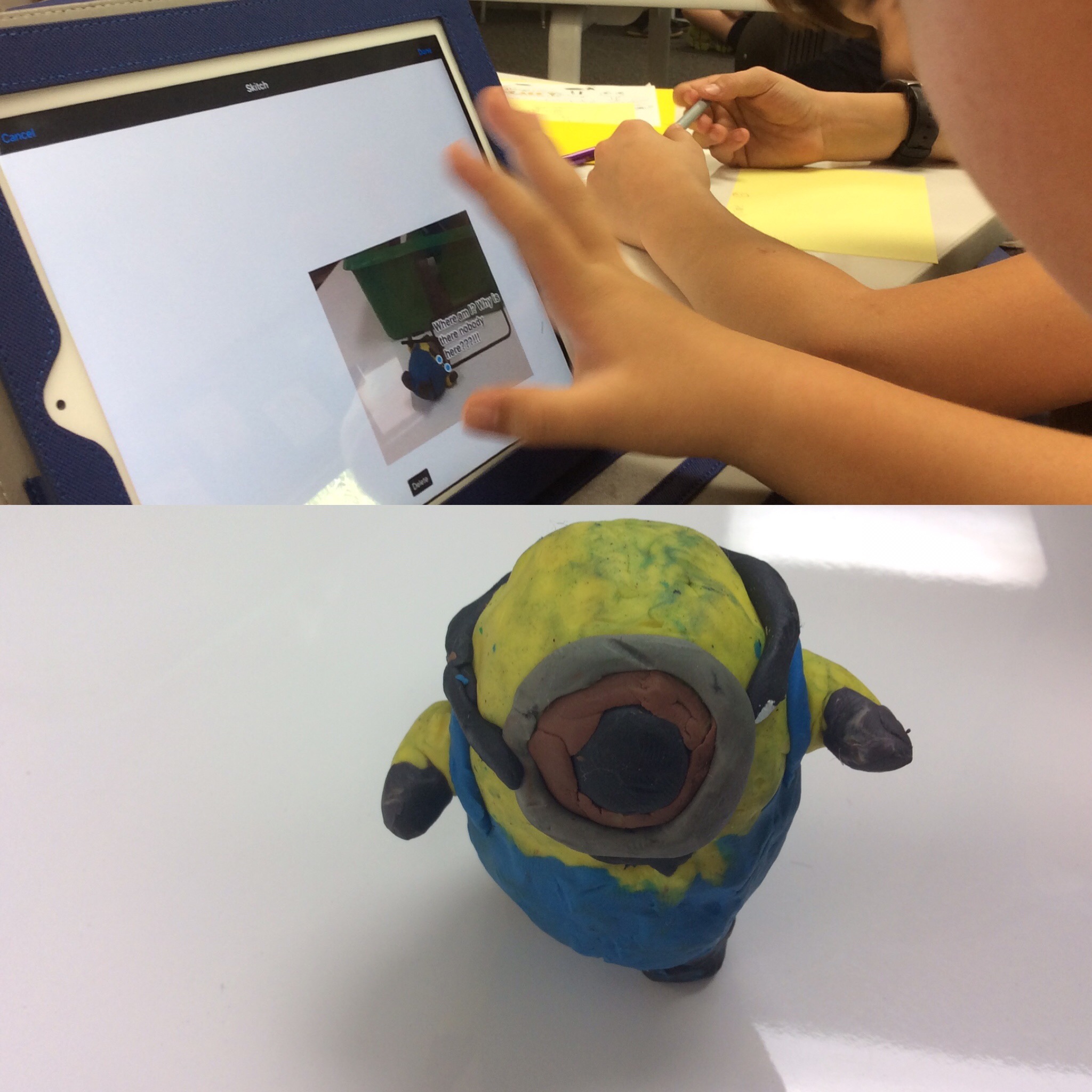
Here a 4th grader applies clay sculpting skills with his digital making skills to make a stop motion animation for A.C.E. hour.
IMG_1128

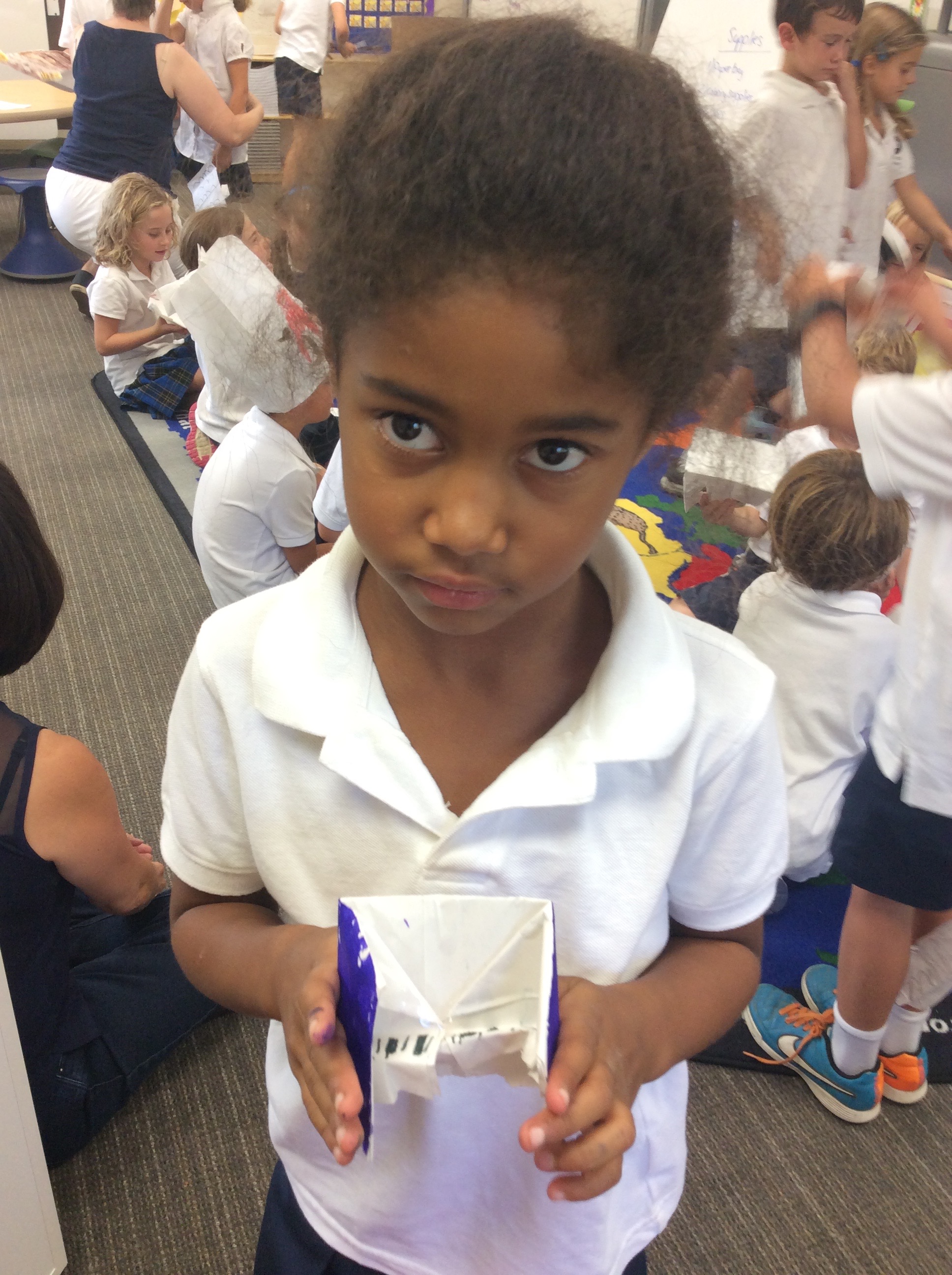
Here a second grader uses her paper programming (origami) skills to show her classmates, “what else can a paper bag be” during one I.C.E. time, an hour that honors the maker and individual in all students.


IMG_8138

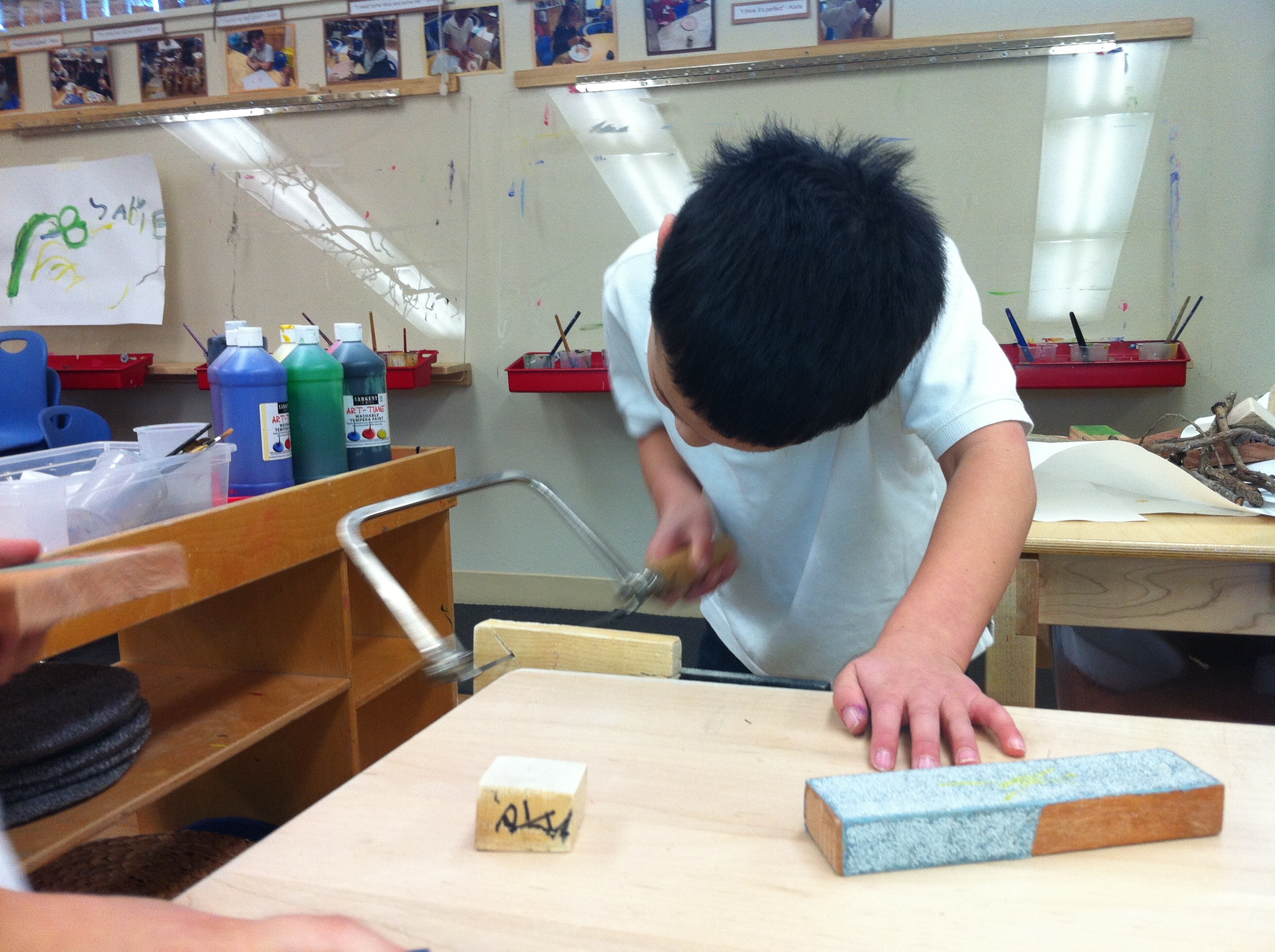
A kindergartener hard at work at his classroom wood working station. While wood working is a traditional craft, it is also an essential mode for learning mathematics, reason and design.
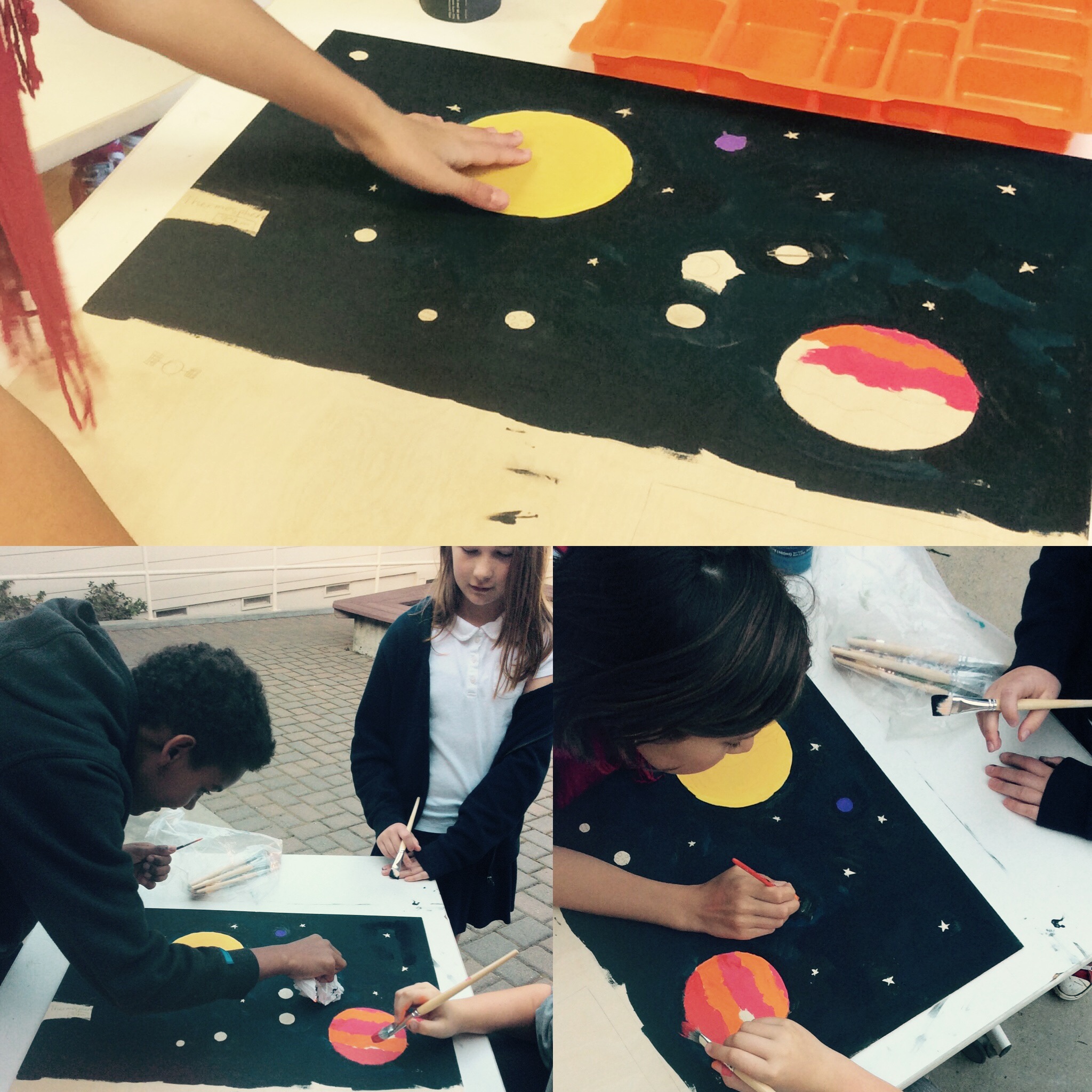


5th grade students often identify with their artist self in other classes. Here students paint the back drop for their museum installation to celebrate astronaut Christa Mcauliffe.
Students often identify with their artist self in other classes. Here 5th grade science students paint the back drop for their museum installation to celebrate astronaut Christa Mcauliffe.
1st Grade Observation Cube Project

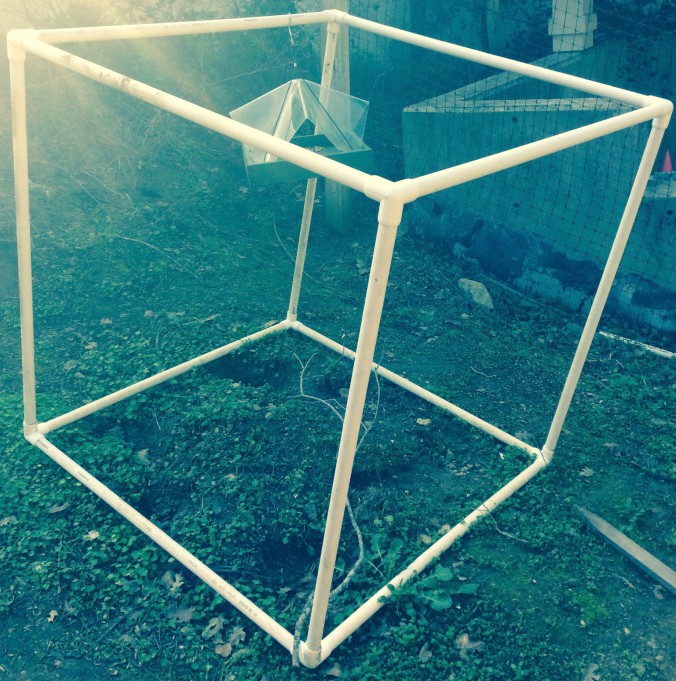
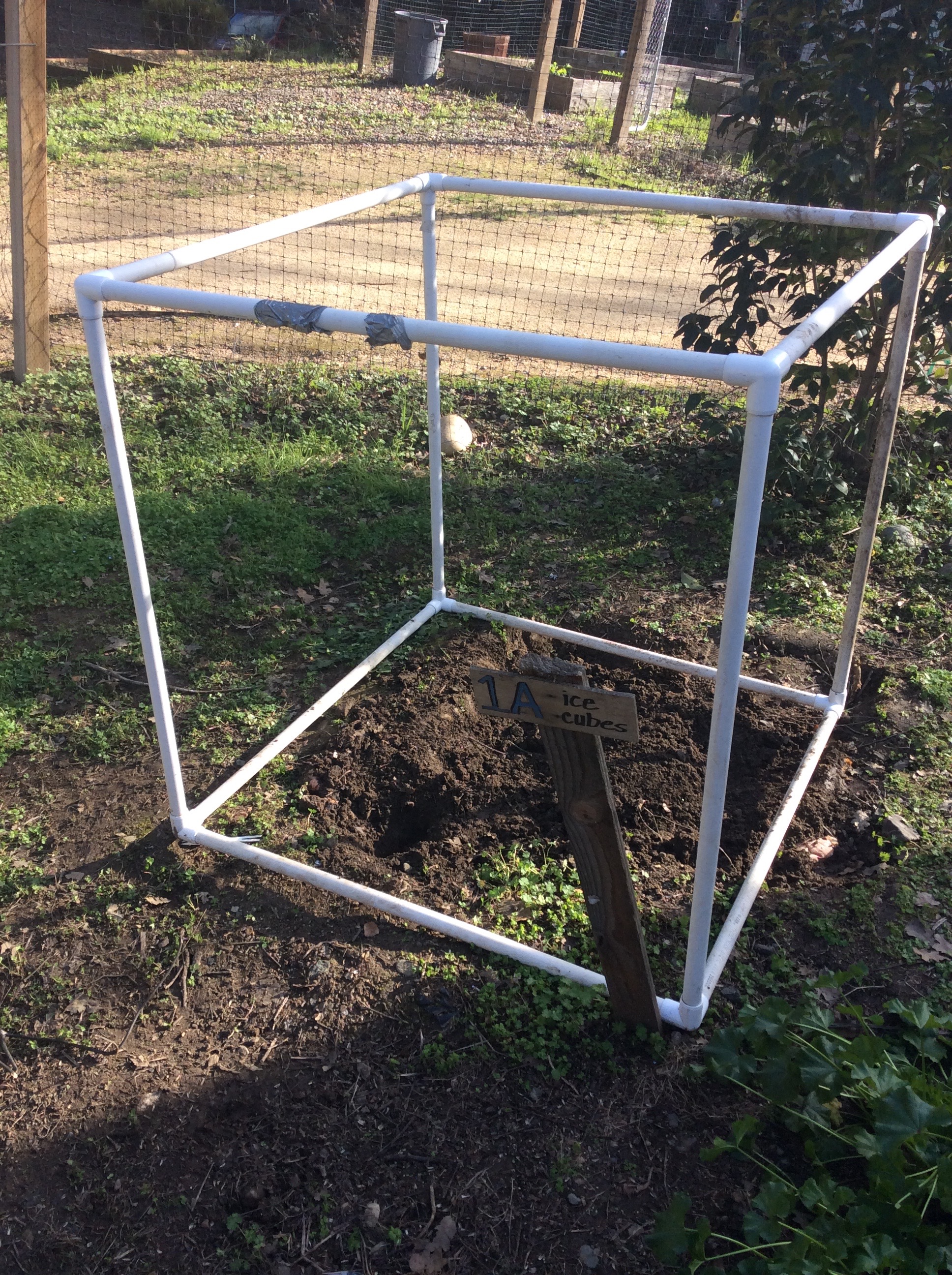
On the Hillbrook School campus in Los Gatos California several 3 dimensional cubes were built by faculty and staff out of PVC pipe and installed in various locations. Inspired by the “One Small Square” children’s non-fiction book series by Donald Silver, National Geographic Fellow Paul Salopek’s Out of Eden walk and the photographic work of David Liittschwager artfully shared in the book “A World in One Cubic Foot” this project blended the skills of real field biologists and making to engage students in authentic inquiry and documentation. This art, science and first grade homeroom collaboration turned the campus into an outdoor art museum and taught first grade students about techniques of real field biologists, empathy for animals species and their needs, and the importance of slow looking.

IMG_3350

During the summer of 2015, lower school science teacher Lara Blom, lower school homeroom teachers Laura Nielson, resident teacher Whitney Infelise and Barbara Johnson, technology integration specialist Kelly Scholten and lower school music teacher Kristin Engineer used a summer fellowship to design a new interdisciplinary unit for Hillbrook School first graders. This project evolved out several inspirations that were going on in the first grade at the same time including Project Zero philosophies on making student thinking visible and the science and art of David Liittschwager’s book “A World in One Cubic Foot.” Part one of this project was to build several cubes of various size ranging from two cubic meters to one cubic foot out of PVC pipe and install these geometric sculptures around the campus without any explanation. This installation was designed at first to spark student curiosity and give a sense of dimension and size.

“These cubes will eventually act as a metaphor for deep observation of the world, as well as an avenue for students to make inferences, make connections and ask meaningful questions,” explains Blom.

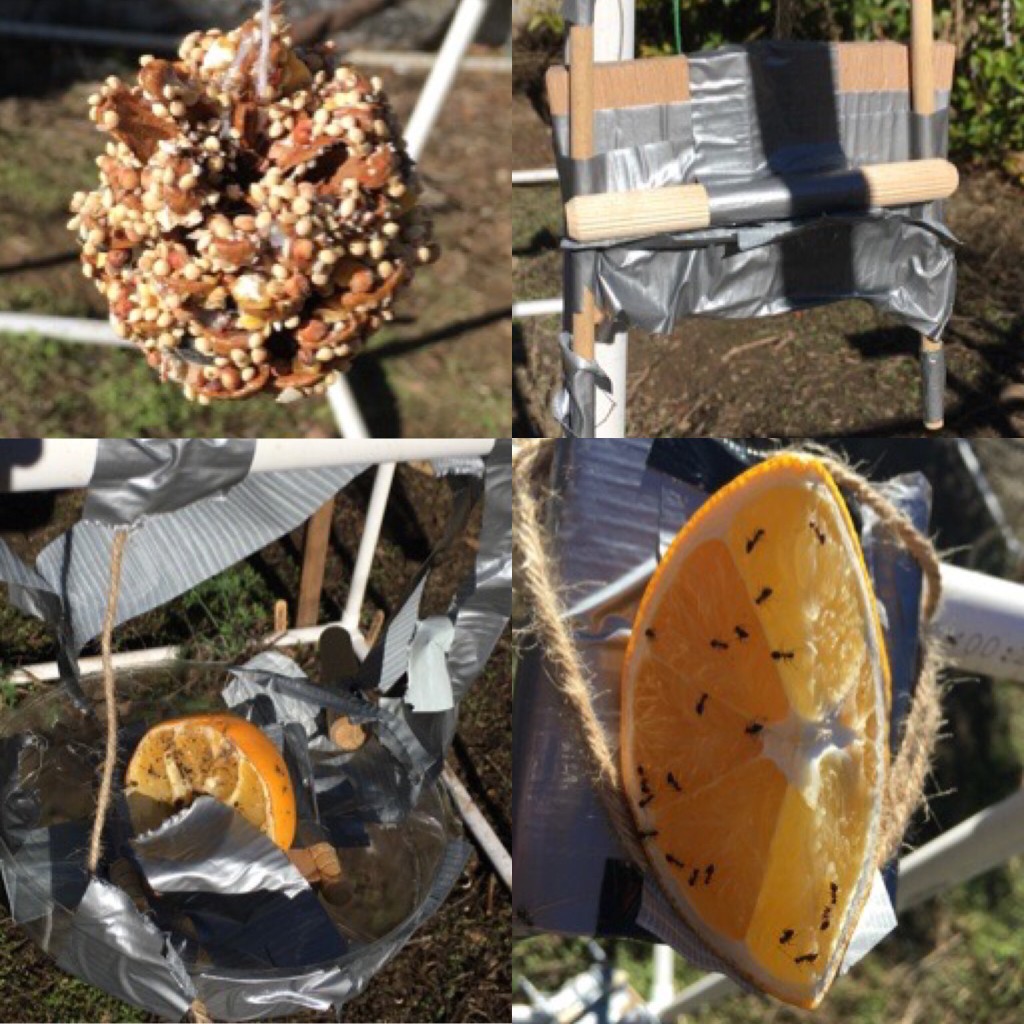
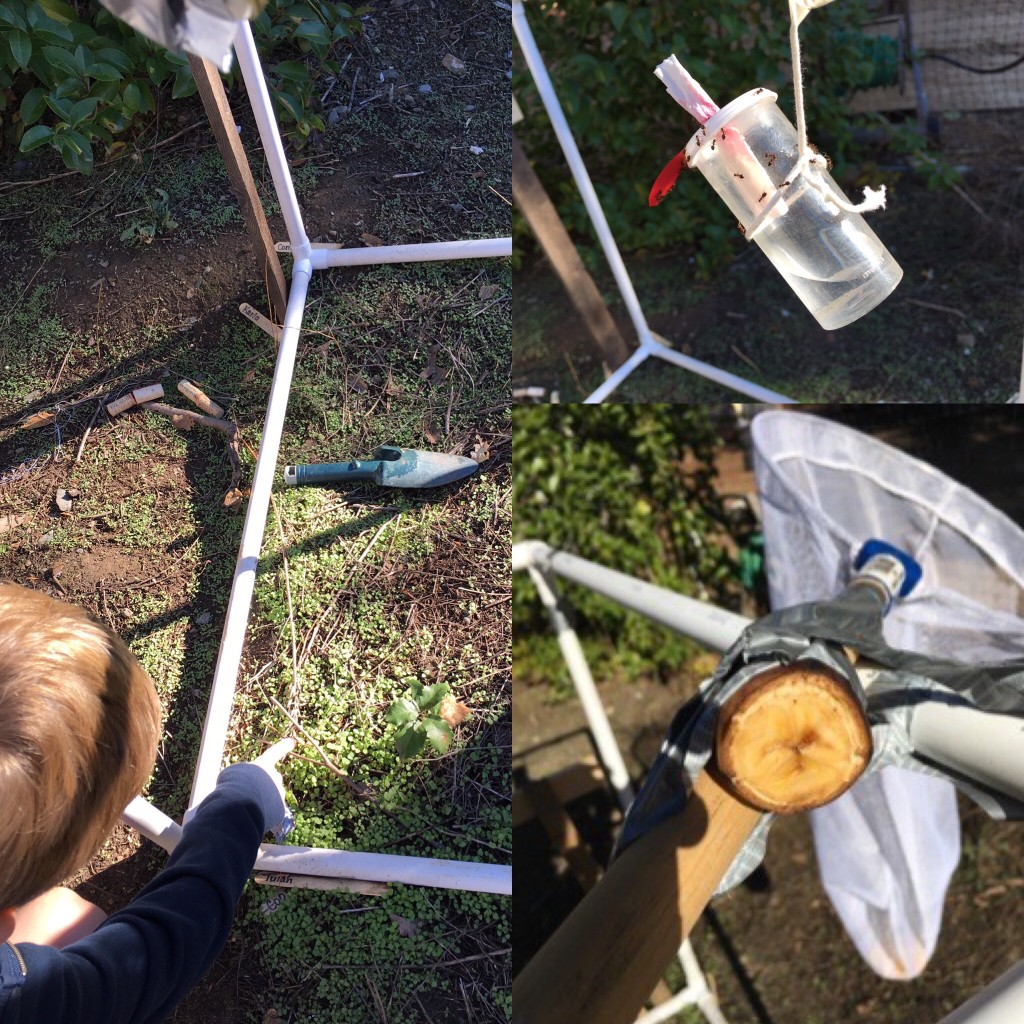
After initial engagement with the cubes in the form of open play and exploration was encouraged, lower school science teacher Lara Blom then extended the use of the cubes to focus on population of native species on the campus through a series of activities. Lara Blom presented her students with the question “How can we use a cube to observe what lives and moves through a space?” which led to discussions and various experiments to lure animals into the square to be documented. Students had to observe what needs campus animals had in order to design lures to get them into the cubes to be photographed. Students built wooden houses and nectar dispensers to install inside of the cubes and filled them with food they predicted would be of interest to native species. Once the lures were built by students, image capturing of the animals was left to technology integration specialist Kelly Scholten, who experimented with time-lapse cameras, iPad cameras and then finally settled on a trophy trail camera with a larger memory card and infrared motion detection.

Thanks to the more efficient capturing of images, students now had evidence of who occupied their cubes not only during the school day, but at night as well. Images captured were then organized by students in an open species categorization technique where students used their own ideas of how to classify the different kinds of animals they were noticing. Students noticed there were animals, that ran, flew, crawled. Animals that were small, medium and large and animals with fur, feathers and exoskeletons. After digging down about a foot into the dirt, students discovered and sorted the smallest life forms that occupied their cubes. Thanks to a parent who lent the class a powerful microscope, students were even able to see moving bacterium in their soil sample. After students were allowed to use their own ideas of how to categorized the different species they Explored a simple phylogenetic flowchart helping them sort their animals like scientists do, from living/non-living and kingdom to general phyla such as mammals. Experts were invited into the classroom to deepen their understanding of differences between “crawlers” such as insects, worms and millipedes. The Youth Science Institute brought living examples of Madagascar Hissing Cockroaches, Tarantulas and others into the classroom for added visualization of species differentiation. A bird expert came in to instruct on common bird species identification.

Documentation of student learning took place in various forms. Blom used a large portfolio to record the inventions students made for luring animals into the cube as well as general class observations and questions. Due to the range of student writing ability, students were asked to record their own ideas on iPads by vocally answering prompts inspired by Project Zero’s Visible Thinking routines, “I observe, I think, I wonder” about their daily work with the cubes. Finally, students also keep individual science notebooks where they keep their slow looking observational drawings, ideas about classification and other ponderings about their work. The culminating documentation that students will all contribute to is a student generated field guide to the animals found in their cube to be shared with the wider community.
The learning goals of this project included: Observation with set parameters, Question formation, Experimental Design, Animal lure design and building, Classification of species. 

4th Graders Invent Light!

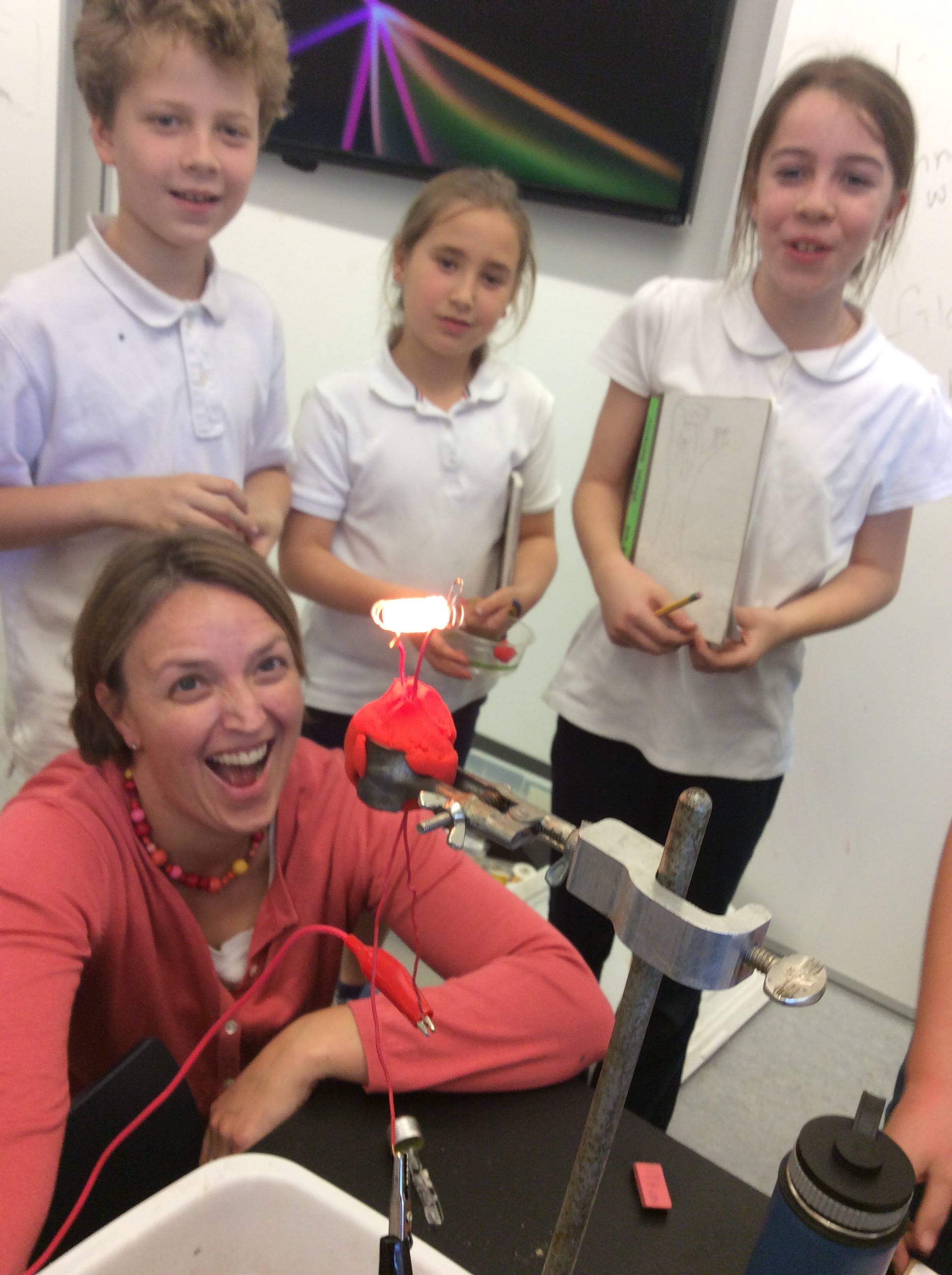
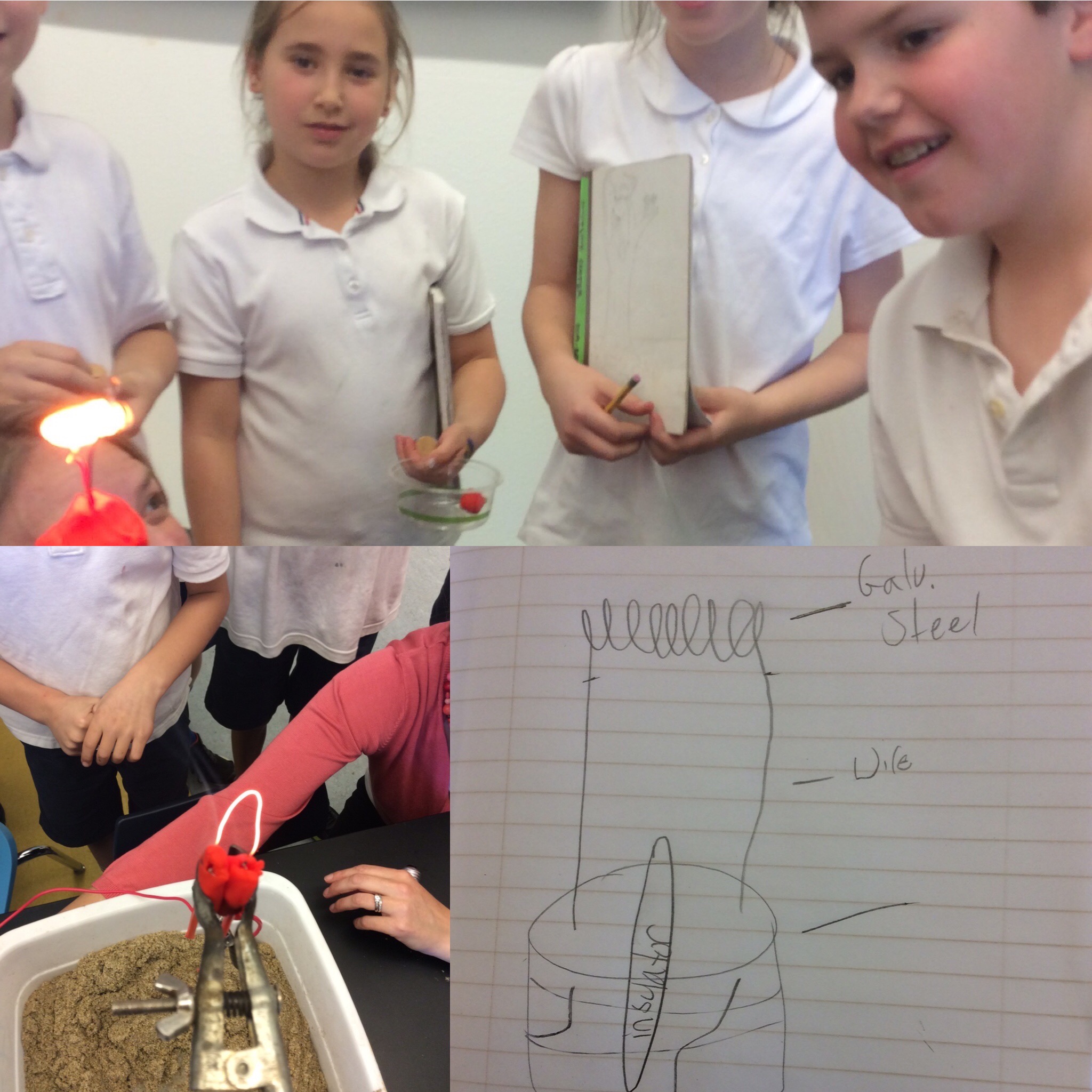
Explaining concepts like electromagnetism can be hard for learners of any age but there seems to be a sweet spot at around 3rd and 4th grade. These are the years that lower school science teacher Jenny Jones works with at the Hillbrook School. Jones has been tinkering with her units on the electromagnetic spectrum for the past few years. One of her new favorite projects is the bulb dissection day, followed by a few days of building and testing materials to make them light up using up to 40 volts of electricity. Kids know the light bulb was “invented” by Edison, but this knowing is the kind that stifles the joy of personal discovery. This project is a perfect example of how to put young learners in the shoes of an inventor and to taste that little bit of glory when something works!  

IMG_3436
“Students love to take things apart, especially things that previously were off limits, like light bulbs,” Jones reports, “Understanding the inner workings of a light bulb is a great addition to any electricity unit and rebuilding their own is the perfect assessment of their understanding of this concept.”

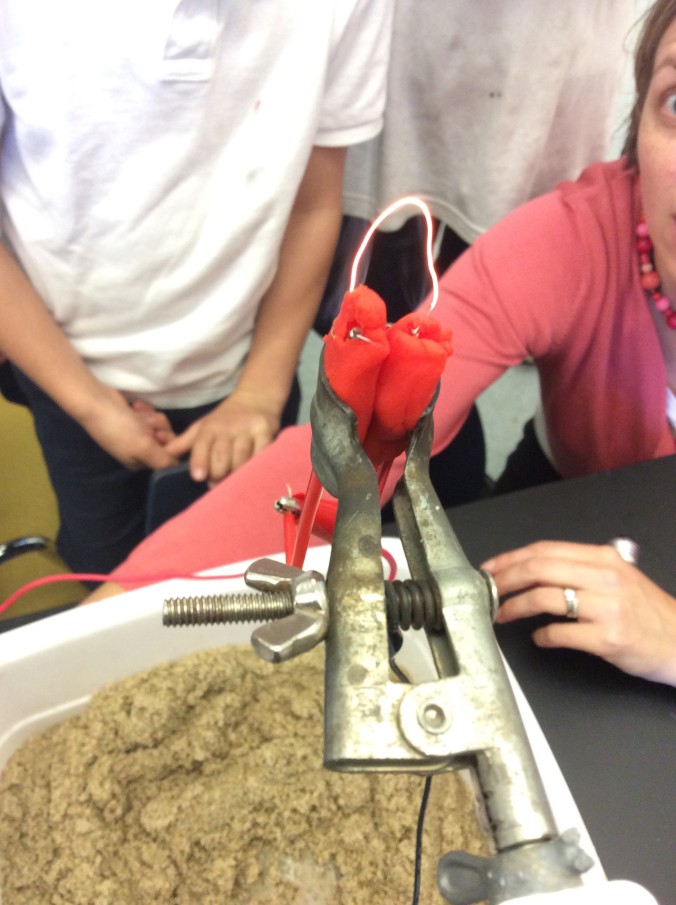
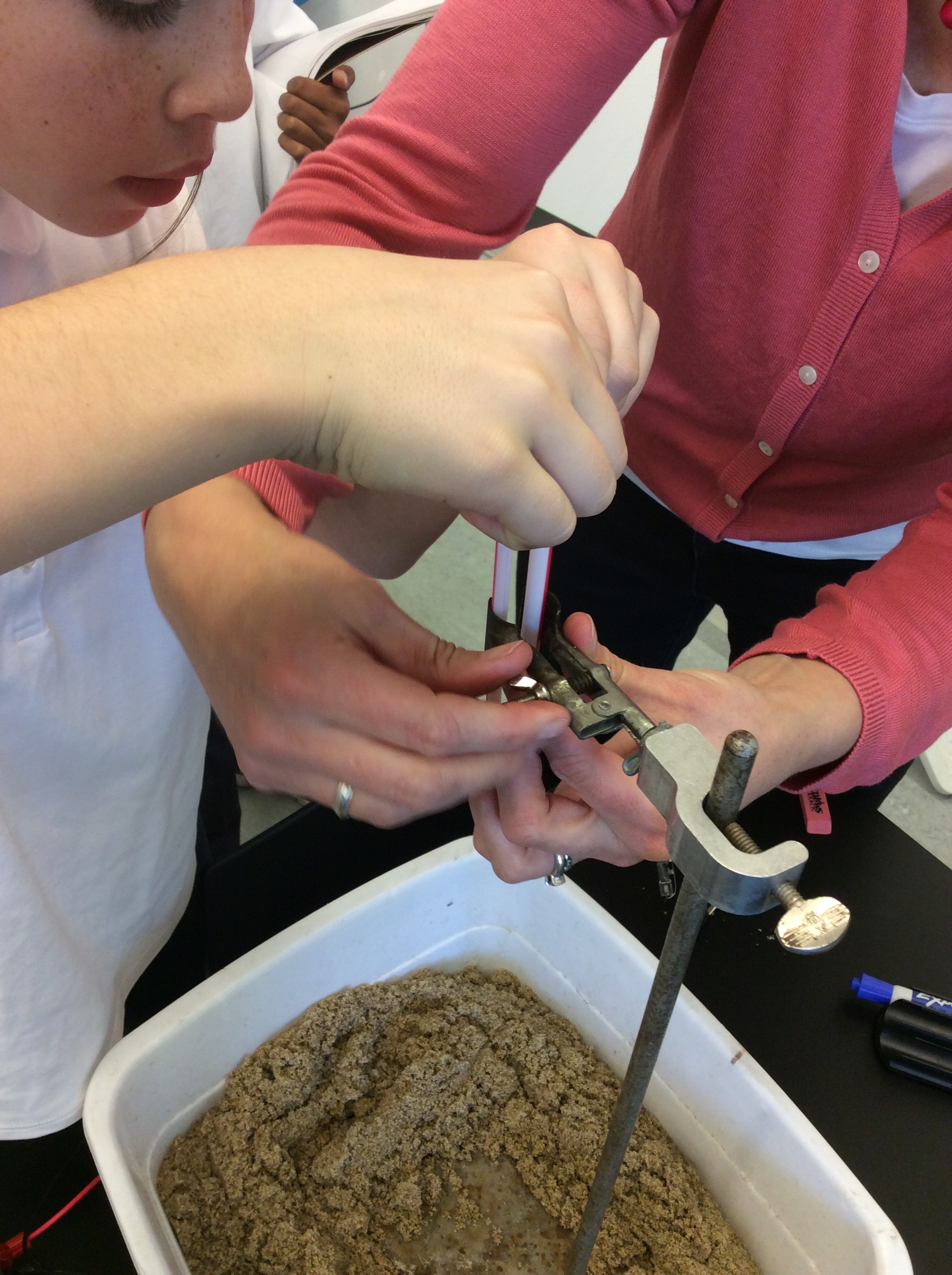
Jones led her class in a discussion about what the “essential” parts of a light bulb were that allowed light to form. Using this discussion students then had a mental model of what a basic light bulb design would consist of. Mrs. Jones explained what materials were available to them including several wire spools of different thickness and different metal type. For the insulators Jones provided clay, cork and plastic straws for design and testing.

IMG_3410This kind of building activity with such immediate testing returns is a joy for learners of all ages. Connecting the test wires to the support wires of the student designs can be tricky so using a ring stand, standing in a bucket of sand, with a cylinder shaped clamp works well as a stabilizer. This will protect you from a potential small fire, spark or smoke, and leaves your hands free to use the power supply. If your supply has a dial that allows you to slowly feed current, you can talk about the importance of voltage and getting a resistor like a bulb to do work for us. This is real engineering and there is a lot of science behind the successes and failures to dive into. Some failures are due to too much resistance, other to not enough. When a design causes a short circuit, be sure to have lots of extra fuses on hand to keep your power supply working.


6.1.A (2)All the students wanted to see what others had built and everyone gathered around for the testing of their prototypes which created learning opportunities during each testing. Students took this information and continued to improve their design and then tested it. This project could go on for days and the students were begging to come in at lunch/recess and any time possible to test their light bulbs. The documentation was in their journal and students were asked to add onto their drawings as they improved their lightbulb. Photos and videos were taken by adults.

Applied Science Makes for Better Listening in 3rd Grade

At the Hillbrook school, art has been a vital part of our curriculum for decades. Now we have the collaborating team made up of Jenny Jones, 3rd and 4th grade science teacher, and Kristen Engineer, lower school music teacher, expanding student experiences into the realm of making music and musical instruments from found art. Read about each unique project here.

When a community loses a valued member and longtime contributor to community building events such as all school concerts, that transition can be a painful, yet hope-filled moment for reflection and growth.  When beloved music teacher Roberta Lipson retired the spring of 2013, we wondered how we would reconstruct our community in a way that reflected who we are as a school today, while cherishing the contributions of our past leaders. Our questions were answered in short order, when Ms. Kristin Engineer, long time colleague of our other beloved Hillbrook music instructor, Elizabeth Crabtree, came into our community in August. In true Hillbrook fashion, Ms. Engineer dared to take a risk and collaborate with lower school science teacher Jenny Jones on what I hope will be a long standing Hillbrook tradition to celebrate the uniquely human and deeply inspiring intersection between the arts and sciences. Engineer, new to our school, and Jones, new to a teaching position of 3rd and 4th graders (Ms. Jones taught grades JK-3 science previously at Hillbrook) decided to dedicate weeks of lesson time and hours of personal time over the weekends and breaks to realize their vision of this project.  And what a vision it is!

(photo credit: Arturo Bejar)

This project began with Ms. Jones introducing the science of sound in her 3rd grade classroom the first week of November. Step one offered a series of discovery labs in Ms. Jones’ room (labs designed to offer students structured exploration of materials and concepts), to allow students to explore the properties of sound. Concepts explored included vibration, wavelength, pitch and the anatomy of the ear. Allowing students to play their way through the learning process, Ms. Jones worked with her students as they gained a confidence in their understanding and by week two, the 3rd graders were ready to start applying that new understanding to their work in music class.

Part two in the collaboration entailed Ms. Engineer introducing the project by exposing students to the concept of pattern, texture, and dynamics while simultaneously tying in one of the core concepts of the project, sustainability and up-cycling (the method of taking what would be discarded as trash and repurposing it for a more valuable object then its original form offered).  Exploration of this concept came from creating found object art in the style of Andy Goldsworthy, an Irish photographer and artist who creates pieces of art from items found in nature.  The children used natural objects such as:  twigs, leaves, flowers, feathers, and rocks. Next, Ms. Engineer worked with the 3rd graders to compose simple musical pieces using recycled blue jeans to open their eyes to the possibility of making music not only with expected items, but with the unexpected ones as well.

The pieces that really brought it all together and connected the science/music was the color.  It takes the science of the color spectrum – applied to sound, and then uses this to tune the string element on the bikes to a particular note and painting them to reflect this choice.

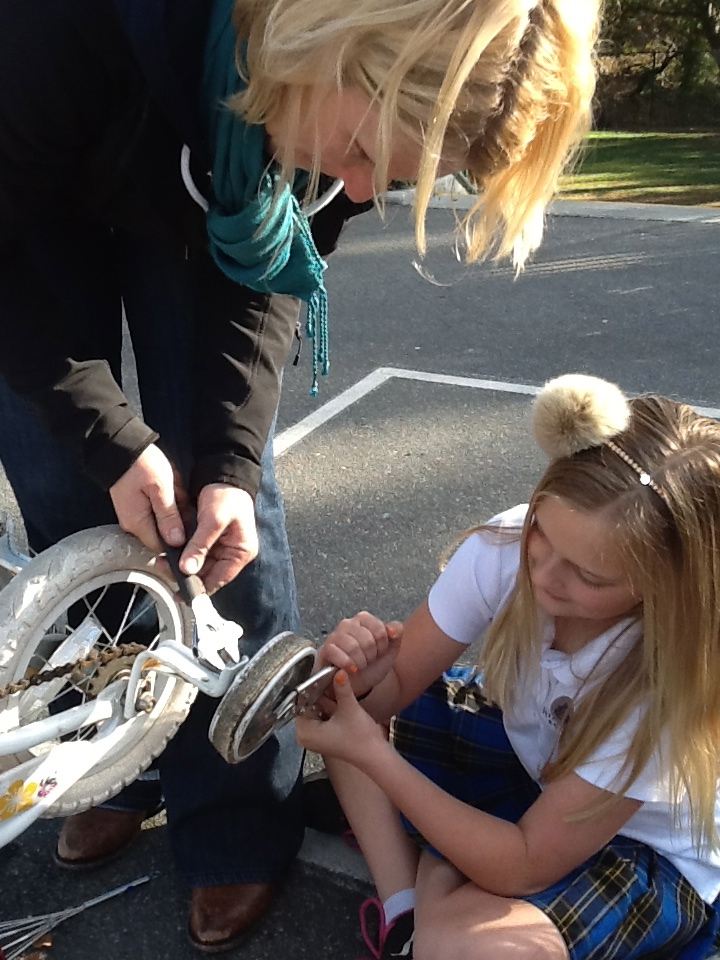
Part three of the project had students tinkering with ten donated old bikes. Using various found metal objects and the creative minds of 3rd graders (the class of 2019), the bikes began to take on a new purpose in life. Inspired by the found art sculptures of Louise Nevelson, an American artist from the early 1900’s, students observed pictures of her unusual art that she made from wood found on the streets of New York City.  Nevelson used white, black, and gold to create an illusion of all the found objects coming together to seem as one creation.  In the bike project, each bike was designated an intensely bright color as well as a musical tone.   The color connected to the C scale – Red = C, Orange = D, Yellow = E, Green = F, Blue = A, Indigo = A, Violet = B. These bright colors were chosen to create an illusion of the found objects and the bike being one new and whole creation.  Circling back to the science integration, each color also reflected low to high wavelengths in the electromagnetic spectrum.

Students dressed to match their tone for the outdoor bike concert.


Once the bikes were completed, Ms Engineer spent time with the students helping them to compose pieces of music using their new instruments. They learned many concepts of composition such as:  dynamics (loud/soft), tempo (fast/slow), form (how a piece is structured), texture (how many sounds the layer), rhythm (layered repeated rhythms), melody (drone string), and timbre (the quality of the sound).  They worked in groups of 3 and 4, learning the important skills of compromise, idea sharing and listening to one another in order to create one final piece of music.  The final showcase of student work was a concert played for the entire school on our outdoor stage.

When asked how she was able to assess student growth during such an open ended project, Ms. Engineer simply stated, when the music works it works. The best kind of assessment is authentic for students and adults. In this case, the end product was a multi-layered work of art, informed by true science and the understanding of sound. Students would not have gotten very far without their ability to see the patterns between their work in science and their in music class. They also needed to learn how to listen to eachother’s ideas without judgement, the core principle in brainstorming and collaboration. One of the best forms of assessment notes Ms. Jones is when the kids forget if they are in music class or in science class because their approach to work naturally integrates the skills and concepts of both disciplines seamlessly.

The final stage of the project was to offer the entire Hillbrook community an interactive art installation on campus where all the students could make music with their friends and explore the sounds the bikes make.  The synergistic effect of the bright colors, the whimsical and inventive sound making designs and the applied science that informed this project, is a joy to see on campus. The creative and hard working efforts of Ms Engineer and Ms Jones to bring beauty and understanding to our community is a perfect example of our school’s growing passion for experiential learning, the importance of play and integrating subject matter into real work. Gaining literacy through teacher/student directed research, as well as making with an emphasis on smart, sustainable design, authentically integrates science, technology, engineering, art and science in a way that feels, looks, and SOUNDS awesome!